
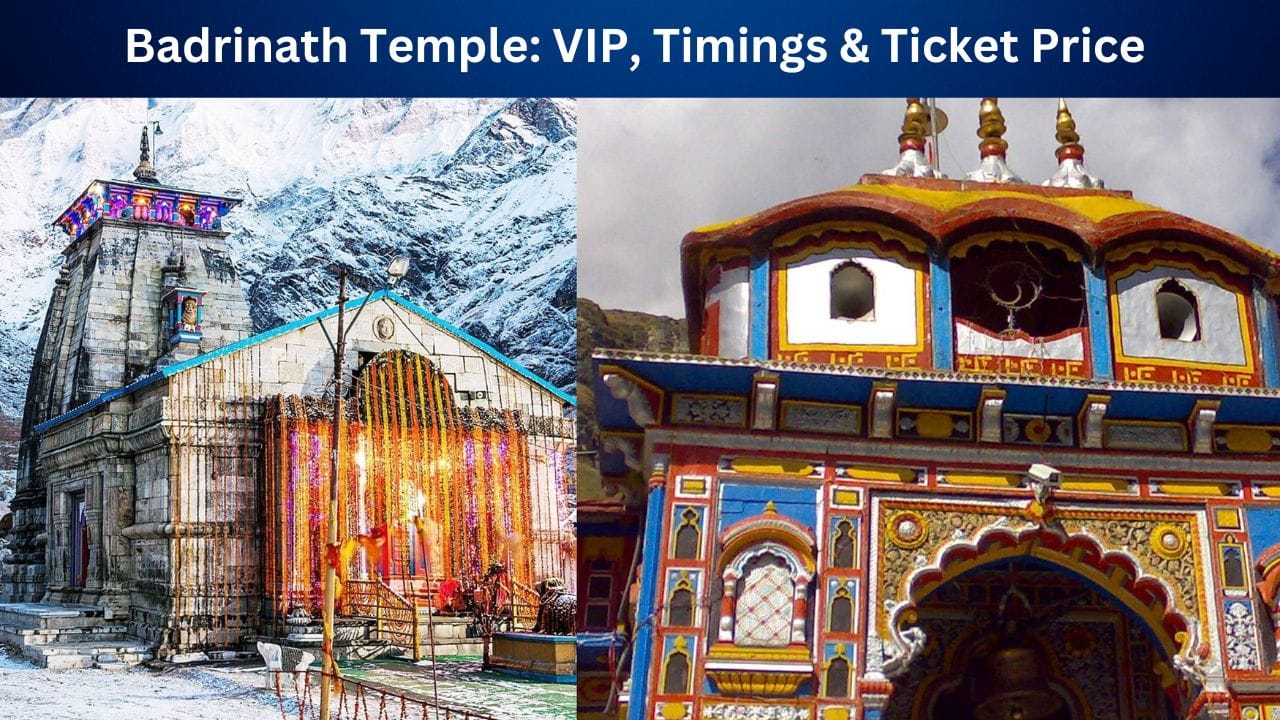
Nestled in the majestic Garhwal Himalayas at an altitude of 3,133 meters (10,279 feet), the Badrinath Temple stands as one of India’s most revered spiritual destinations. Dedicated to Lord Vishnu in his manifestation as Badrinarayan, this ancient shrine attracts millions of devotees annually who seek divine blessings and spiritual awakening.

As one of the four sacred Char Dham pilgrimage sites and part of the 108 Divya Desams (sacred Vishnu temples), Badrinath holds immense religious significance in Hinduism. Whether you’re planning your first pilgrimage or returning for spiritual renewal, this comprehensive 2026 guide covers everything you need to know about temple opening dates, VIP darshan booking, timings, accommodation, and the complete Char Dham Yatra experience.
Badrinath Temple Opening Date 2026
When Will Badrinath Temple Open in 2026?
Expected Opening Date: April 24, 2026 (to be officially confirmed)
The exact opening date of Badrinath Temple is announced annually on Basant Panchami (Saraswati Puja), which falls on February 15, 2026. The announcement is made from the royal court of Tehri Naresh in Narendra Nagar, Tehri Garhwal District, following ancient traditions.
Historical Opening Dates for Reference
| Year | Opening Date | Day |
|---|---|---|
| 2025 | May 4, 2025 | Sunday |
| 2026 | April 24, 2026 (Expected) | Friday |
Note: The opening date varies each year based on the Hindu Panchang (lunar calendar) and astrological calculations. The temple typically opens in late April or early May.
Opening Ceremony: A Grand Spectacle
The Kapat Udghatan (door opening ceremony) is a magnificent event marked by:
Pre-Opening Rituals:
- Tel Kalash Yatra: Sacred sesame oil journey from Narendra Nagar to Badrinath
- Maha Abhishek: Special ritual bathing with sacred sesame oil
- Vedic Chants: Continuous mantras by temple priests
- Divine Procession: The deity (currently at Narasimha Temple, Joshimath) is ceremonially brought back to Badrinath
Opening Day Events:
- Time: Early morning (typically 4:30 AM – 6:30 AM)
- Ritual: Temple doors opened with traditional ceremonies
- First Darshan: Thousands of devotees gather to witness the first divine viewing
- Bells & Conch: Sacred sounds echo through the mountains
- Prasadam Distribution: Special offerings to all present
Who Can Attend: All devotees are welcome to witness this auspicious event, but expect massive crowds and challenging weather conditions.
Badrinath Temple 2026: Complete Guide to Darshan, Puja Booking & Yatra Planning
Badrinath Temple Closing Date 2026
When Will Badrinath Temple Close in 2026?
Expected Closing Date: November 13, 2026 (tentative)
The exact closing date is announced on Vijayadashami (Dussehra), which falls in September/October. The temple traditionally closes on Bhai Dooj (the day after Diwali).
Why Does Badrinath Close?
Reason: Extreme winter conditions make the temple and surrounding areas inaccessible:
- Heavy snowfall (2-6 meters)
- Temperatures plunge to -20°C or below
- Roads blocked completely
- Survival impossible at high altitudes
Duration: The temple remains closed for approximately 6 months each year.
Closing Ceremony: Bidding Farewell
Kapat Bandh (door closing ceremony) includes:
Rituals Performed:
- Final Aarti: Last evening prayers before winter
- Akhand Jyoti: An eternal lamp is lit that burns throughout winter
- Deity Transfer: Lord Badrinath’s idol ceremoniously moved to Narasimha Temple in Joshimath (45 km away)
- Procession: Grand procession carrying the deity with traditional music and chants
- Blessings: Final blessings for devotees
Winter Worship: During the closed months, daily worship continues at Narasimha Temple, Joshimath, where devotees can still seek blessings.
Badrinath Temple Darshan Timings 2026
Daily Schedule
Temple Open: 4:30 AM – 9:00 PM (May to November)
Afternoon Break: 12:00 PM – 3:00 PM (Temple Closed)
Complete Daily Ritual Schedule
| Time | Ritual/Activity | Access |
|---|---|---|
| 4:30 AM – 5:00 AM | Suprabhata Seva (Wake-up ceremony) | Special Seva only |
| 5:00 AM – 6:00 AM | Maha Abhishekam (Sacred bath) | Special Seva only |
| 6:00 AM – 8:00 AM | Morning Darshan | All devotees |
| 8:00 AM – 12:00 PM | General Darshan (Sarva Darshan) | All devotees |
| 12:00 PM – 3:00 PM | TEMPLE CLOSED (Bhog, rest, preparation) | No entry |
| 3:00 PM – 4:00 PM | Temple reopens | Preparations |
| 4:00 PM – 6:00 PM | Afternoon Darshan | All devotees |
| 6:00 PM – 7:00 PM | Sandhya Aarti (Evening prayers) | All devotees |
| 7:00 PM – 9:00 PM | Evening Darshan | All devotees |
| 9:00 PM – 9:30 PM | Shayan Aarti (Closing ceremony) | Special Seva |
| 9:30 PM | Temple Closes | — |
Best Time for Darshan
To Avoid Crowds:
- Early Morning: 6:00 AM – 8:00 AM (less crowded, peaceful)
- Late Evening: 7:00 PM – 8:30 PM (after evening aarti)
To Avoid:
- Weekends (Saturday-Sunday)
- Public holidays
- Peak months (May-June)
Peak Season: May to June (post-opening rush)
Best Weather: September to early October (clear skies, post-monsoon)
Badrinath VIP Darshan: Complete Guide
What is VIP Darshan?
VIP Darshan (also called Special Darshan) is a priority access service that allows devotees to:
- Skip long queues (save 2-4 hours)
- Faster entry to sanctum sanctorum
- More time for prayers and viewing
- Better positioning near the deity
- Peaceful experience with fewer crowds
Ideal For:
- Senior citizens
- Differently-abled persons
- Families with young children
- Devotees with time constraints
- Those seeking peaceful darshan
VIP Darshan Ticket Prices 2026
| VIP Darshan Type | Price (₹) | Duration | Availability |
|---|---|---|---|
| Standard VIP Darshan | 300-500 | 30-45 minutes | Daily |
| Maha Abhishekam Seva | 4,700 | 2 hours | 4:30 AM – 6:30 AM |
| Abhishekam Pooja | 4,500 | 1.5 hours | 6:30 AM – 12:00 PM |
| VIP with Helicopter Package | 1,100-5,100 | Variable | Selected operators |
General Darshan: FREE (but 2-4 hour queue wait time expected)
Important: Prices may vary based on season and demand. VIP darshan is especially valuable during peak season (May-June) when general darshan queues can exceed 4-6 hours.
VIP Darshan Timings
Morning Session:
- Time: 4:30 AM – 1:00 PM
- Best Period: 6:00 AM – 10:00 AM (less crowded)
Afternoon Break:
- Time: 1:00 PM – 4:00 PM (Temple Closed)
Evening Session:
- Time: 4:00 PM – 9:00 PM
- Best Period: 7:00 PM – 8:30 PM
How to Book Badrinath VIP Darshan Online
Official Website
👉 https://badrinath-kedarnath.gov.in
(Badrinath-Kedarnath Temple Committee – Official Government Portal)
Step-by-Step Online Booking Process
Step 1: Visit Official Website
- Open browser and go to: https://badrinath-kedarnath.gov.in
- Ensure stable internet connection
- Have all documents ready
Step 2: Register/Login
For New Users (Registration):
- Click on “Pilgrim Registration” or “Click Here For Registration”
- Webpage displays: “श्री बदरी-केदारेश्वरो विजयते”
- Enter required details:
- Mobile Number (10 digits)
- Full Name
- Gender
- Email Address
- Captcha Code
- Click “Register” button
- OTP Verification: Enter OTP sent to mobile and email
- Create Password: Set a strong password for future logins
- Complete registration
For Existing Users:
- Click “Login” option
- Enter Mobile Number/Email and Password
- Click “Login”
Step 3: Navigate to Booking Section
- After login, go to homepage
- Click on “Tickets” or “Online Services”
- Select “Pooja/Seva Booking” or “Special Darshan”
Step 4: Select VIP Darshan
- Choose “Badrinath Temple” from dropdown
- Browse available sevas/darshans
- Select “VIP Darshan” or “Maha Abhishekam” (most popular VIP option)
- Check availability for your preferred date
Step 5: Choose Date and Time
- Calendar displays available dates
- Select your visit date
- Choose time slot (if multiple options available)
- Note: During peak season, book 15-30 days in advance
Step 6: Enter Devotee Details
Required Information:
- Primary Devotee:
- Full Name (as per ID proof)
- Age
- Gender
- Mobile Number
- Email Address
- ID Proof Details:
- Type (Aadhaar/PAN/Passport/Voter ID/Driving License)
- ID Number
- Additional Devotees (if applicable):
- Use “Add Member” button
- Enter details for each person
- Maximum persons: Varies by seva (usually 1-4 persons)
Step 7: Upload Documents
- Scanned/photographed ID proof
- Passport-size photograph (if required)
- File formats: JPEG, PNG, PDF
- File size: Under 2 MB
- Clear, readable images
Step 8: Review Booking
- Verify all details carefully:
- Names (spelling must match ID)
- Date and time
- Number of persons
- Contact details
- Total amount
- Make corrections if needed
- Confirm booking details
Step 9: Payment
Accepted Payment Methods:
- UPI (Google Pay, PhonePe, Paytm, BHIM) – Fastest
- Credit Card (Visa, Mastercard, RuPay, Amex)
- Debit Card (All major banks)
- Net Banking (All nationalized and private banks)
Payment Process:
- Select payment method
- Enter payment credentials
- Complete OTP/PIN authentication
- Confirm transaction
- Wait for processing (don’t close or refresh browser)
Step 10: Download Confirmation
After Successful Payment:
- Booking confirmation displayed on screen
- SMS sent to registered mobile number
- Email with PDF attachment
- Download options: Save PDF to device
Booking Receipt Contains:
- Booking Reference Number
- Devotee Names
- VIP Darshan Date and Time
- Temple Name (Badrinath)
- Seva Type
- Amount Paid
- Payment Transaction ID
- Entry Instructions
- Contact information
CRITICAL: Carry printed copy or show on mobile at temple entry. Original ID proof mandatory.
Offline VIP Darshan Booking
Booking at Temple Counters
Location: VIP Darshan Counter near Badrinath Temple entrance
Timings: 5:00 AM – 4:00 PM (approximately)
Process:
- Reach temple area early morning
- Locate “VIP Darshan” or “Special Seva” counter
- Check availability for current day or advance booking
- Fill application form (available at counter)
- Submit original ID proof + photocopy
- Make payment in cash (₹300-500)
- Collect receipt and VIP pass
- Note down reporting time and entry gate
Advantages:
- Same-day booking possible (if slots available)
- Direct interaction with temple staff
- Immediate confirmation
- No internet/technical issues
Disadvantages:
- First-come-first-served basis
- May have queues during peak season
- Limited advance booking
- Cash payment required
Booking Through Tour Operators
Many authorized tour and travel operators offer packages including VIP Darshan:
- Check if VIP darshan is included
- Verify operator credentials
- Confirm total costs
- Get written confirmation
Badrinath Temple Sevas & Poojas – Complete List with Prices
Early Morning Sevas (4:30 AM – 8:00 AM)
| Seva Name | Price (₹) | Timings | Duration | Persons | Benefits |
|---|---|---|---|---|---|
| Suprabhata Seva | 500-1,000 | 3:30-4:30 AM | 1 hour | 2-4 | Wake-up ceremony, first darshan |
| Maha Abhishekam | 4,700 | 4:30-6:30 AM | 2 hours | 1-4 | Sacred bathing ritual, VIP access |
| Abhishekam Pooja | 4,500 | 6:30 AM-12:00 PM | 1.5 hours | 1-4 | Holy ablution, special blessings |
Morning Sevas (8:00 AM – 12:00 PM)
| Seva Name | Price (₹) | Timings | Persons | Description |
|---|---|---|---|---|
| Ved Path | 2,500 | 7:30 AM-12:00 PM | Family | Recitation of Vedic scriptures |
| Geeta Path | 2,500 | 7:30 AM-12:00 PM | Family | Bhagavad Gita recitation |
| Vishnu Sahasranamam | 701-3,000 | 7:00-8:00 AM | Couple | 1000 names of Lord Vishnu |
Evening Sevas (6:00 PM – 9:00 PM)
| Seva Name | Price (₹) | Timings | Duration | Highlights |
|---|---|---|---|---|
| Geet Govind & Aarti | 3,100 | 6:00-7:30 PM | 1.5 hours | Musical prayers, evening worship |
| Kapoor Aarti | 201 | 6:00-6:10 PM | 10 minutes | Camphor aarti |
| Chandi Aarti | 401 | 6:15-6:30 PM | 15 minutes | Special evening prayers |
| Swaran Aarti | 501 | 6:30-6:45 PM | 15 minutes | Golden aarti ceremony |
| Astotari Puja | 401 | 6:45-7:00 PM | 15 minutes | 108 names worship |
| Vishnu Sahasranamawali | 601 | 7:20-7:45 PM | 25 minutes | Extended Vishnu prayers |
| Shayan Aarti | 3,100 | 8:00-9:00 PM | 1 hour | Night closing ceremony |
Special Pooja Packages
| Package Type | Price Range (₹) | Inclusions |
|---|---|---|
| Basic Pooja | 201-1,000 | Simple worship, prasadam |
| Standard Package | 2,500-5,000 | Multiple poojas, special darshan |
| Premium Package | 5,000-10,000 | Comprehensive rituals, VIP access |
| Complete Package | 10,000-51,000 | All major sevas, exclusive benefits |
Important Notes:
- Advance booking recommended (7-15 days)
- Some sevas limited to 2-10 slots per day
- Prices subject to temple committee revision
- Book online or at temple counters
About Badrinath Temple: History & Significance
Location & Geography
Complete Address:
Badrinath Temple
Badrinath Town
Chamoli District
Uttarakhand – 246422, India
Geographic Details:
- Altitude: 3,133 meters (10,279 feet) above sea level
- River: On the banks of Alaknanda River
- Mountain Range: Garhwal Himalayas
- Nearest Peak: Neelkanth Peak (6,596 m) – visible from temple
Coordinates: 30.7433° N, 79.4938° E
Historical Background
Ancient Origins:
The temple’s history dates back thousands of years, with mentions in ancient texts like the Skanda Purana and Vishnu Purana.
Adi Shankaracharya’s Role (8th Century CE):
- The great philosopher-saint Adi Shankaracharya re-established/renovated the temple around 750-820 CE
- Found the sacred Saligram stone idol (believed to be self-manifested) in Narada Kund (hot spring)
- Installed it in the temple’s sanctum
- Established the tradition of Rawal (chief priest)
Temple Name Origin:
The name “Badrinath” comes from:
- Badri: A type of berry (also called wild jujube or Indian plum)
- Nath: Lord
Legend: When Lord Vishnu meditated here, Goddess Lakshmi transformed into a Badri tree to shield him from harsh weather. Hence, the place became known as Badri-Nath (Lord of Badri).
Mythological Significance
The Meditation of Lord Vishnu:
According to Hindu mythology, Lord Vishnu performed severe penance (tapasya) at this location for the welfare of humanity. The spot where he meditated is now the temple’s main sanctum.
Connection to Mahabharata:
- The Pandavas (from the Mahabharata epic) are believed to have visited Badrinath during their final journey (Mahaprasthana)
- Bhima (one of the Pandava brothers) is said to have destroyed the Badri tree, and it never grew again
Narayan Ashram:
Located about 60 km from Badrinath, this ashram is where Nar and Narayana (manifestations of Lord Vishnu) performed penance. Badrinath is considered their earthly abode.
The Divine Idol
Unique Features of Lord Badri Vishal:
- Material: Black Saligram stone (shaligram shila)
- Form: Sitting in Padmasana (lotus position)
- Height: About 1 meter (3.3 feet) tall
- Posture: Meditating with four arms
- Attributes:
- Right Upper Hand: Holds discus (Sudarshana Chakra)
- Left Upper Hand: Holds conch (Shankha)
- Right Lower Hand: In blessing posture (Abhaya Mudra)
- Left Lower Hand: Rests on left thigh
- Appearance: Richly adorned with gold ornaments, precious stones, flowers
Special Days:
On certain occasions, the idol wears different attire:
- Gold jewelry on major festivals
- Special silk garments during celebrations
- Diamond-studded crown on Janmashtami
Temple Architecture
Architectural Style: Garhwali Buddhist Vihara style (resembling Buddhist monasteries)
- Reflects the period when Buddhism was prominent in the region
- Later renovated into a Hindu temple
Structure:
- Main Temple (Garbhagriha): Houses the main deity
- Mandapa: Assembly hall for devotees
- Shikhara (Spire): Towering structure with colorful painting
- Entrance: Intricately carved gateway
- Fifteen Idols: Including Nara-Narayana, Lakshmi, Garuda, Navadurga
Surrounding Shrines:
- Tapt Kund: Natural hot spring (45°C)
- Narad Kund: Where idol was found
- Brahma Kapal: Sacred ghat for ancestral rites
- Surya Kund: Another hot spring
- Mata Murti Temple: Dedicated to mother of Badrinath
- Charanpaduka: Footprints of Lord Vishnu (3 km trek)
Religious Significance
One of Char Dham:
Badrinath is one of the four sacred pilgrimage sites (Char Dham) in India:
- Badrinath (North – Uttarakhand)
- Dwarka (West – Gujarat)
- Puri (East – Odisha)
- Rameswaram (South – Tamil Nadu)
Part of Chhota Char Dham:
In Uttarakhand alone, four sacred sites form the Chhota (Small) Char Dham:
- Yamunotri
- Gangotri
- Kedarnath
- Badrinath
One of 108 Divya Desams:
Badrinath is one of the 108 sacred temples dedicated to Lord Vishnu, mentioned in the works of Alwar saints (Vaishnava poets).
Spiritual Belief:
- Visiting Badrinath grants moksha (liberation from cycle of rebirth)
- Cleansing of all sins (papa nivaran)
- Fulfillment of wishes
- Spiritual awakening
Char Dham Yatra 2026: Complete Opening Dates
All Four Temples Opening Schedule
| Temple | Opening Date 2026 | Day | Announcement Day |
|---|---|---|---|
| Yamunotri | April 19, 2026 | Sunday | Announced on Basant Panchami |
| Gangotri | April 19, 2026 | Sunday | Announced on Basant Panchami |
| Kedarnath | April 22, 2026 | Wednesday | Announced on Maha Shivratri |
| Badrinath | April 24, 2026 | Friday | Announced on Basant Panchami |
Note: All dates are tentative and subject to official confirmation by the Char Dham Committee.
Char Dham Yatra Circuit
Traditional Sequence:
- Yamunotri (Source of Yamuna River) → 2. Gangotri (Source of Ganga River) → 3. Kedarnath (Jyotirlinga of Lord Shiva) → 4. Badrinath (Abode of Lord Vishnu)
Duration: 10-15 days (complete circuit)
Distance: Approximately 1,500 km (entire route)
How to Reach Badrinath Temple
By Air
Nearest Airport: Jolly Grant Airport, Dehradun
- Airport Code: DED
- Distance from Badrinath: 314 km
- Time: 10-11 hours by road
Connectivity:
- Domestic Flights: Delhi, Mumbai, Bangalore, Kolkata
- Flight Duration from Delhi: 1 hour
From Airport to Badrinath:
- Option 1: UPSRTC/GMT buses to Badrinath
- Buses from Dehradun ISBT
- Duration: 10-12 hours
- Cost: ₹500-800
- Option 2: Taxi/Cab
- Pre-booked taxis available
- Cost: ₹6,000-10,000
- Duration: 10-11 hours
- Option 3: Helicopter Service (Seasonal)
- Phata/Guptkashi to Badrinath
- Cost: ₹7,000-15,000 per person
- Duration: 30-45 minutes flight
By Train
Nearest Railway Station: Haridwar Railway Station
- Station Code: HW
- Distance from Badrinath: 314 km
- Time: 10-11 hours by road
Alternative Station: Rishikesh Railway Station
- Station Code: RKSH
- Distance from Badrinath: 297 km
- Time: 10 hours by road
Major Trains to Haridwar:
- From Delhi: Shatabdi Express, Jan Shatabdi, AC Superfast, Mail/Express
- From Mumbai: Mumbai-Dehradun Express
- From Kolkata: Doon Express
- From Bangalore/Chennai: Via Delhi/Lucknow
From Railway Station to Badrinath:
Option 1: State Transport Buses
- UPSRTC/GMT Buses: Regular services from Haridwar/Rishikesh
- Types: Ordinary, Semi-Deluxe, Volvo
- Cost: ₹500-1,200
- Booking: At bus stand or online (upsrtconline.in)
Option 2: Shared Taxis
- From: Haridwar/Rishikesh
- Cost: ₹800-1,500 per person
- Duration: 8-10 hours
- Booking: At taxi stands
Option 3: Private Taxi
- Cost: ₹5,000-8,000 (one way)
- Duration: 8-10 hours
- Booking: Pre-book online or at taxi stands
By Road
From Major Cities:
| City | Distance | Time | Route |
|---|---|---|---|
| Delhi | 525 km | 14-16 hours | Delhi → Haridwar → Rishikesh → Rudraprayag → Joshimath → Badrinath |
| Haridwar | 314 km | 10-11 hours | Haridwar → Devprayag → Rudraprayag → Joshimath → Badrinath |
| Dehradun | 330 km | 11-12 hours | Dehradun → Rishikesh → Rudraprayag → Joshimath → Badrinath |
| Rishikesh | 297 km | 10 hours | Rishikesh → Devprayag → Rudraprayag → Joshimath → Badrinath |
Road Condition:
- NH-58 (Delhi to Rishikesh): Excellent, 4-lane highway
- NH-7 (Rishikesh to Badrinath): Good, 2-lane mountain road
- Terrain: Mountainous, winding roads, scenic but challenging
- Landslides: Common during monsoon (July-August)
Self-Drive Tips:
- Experience in mountain driving essential
- Start early morning
- Regular fuel stops (limited pumps after Joshimath)
- Carry emergency supplies
- Check weather and road conditions
- GPS/navigation recommended
Bus Services:
From Delhi:
- UPSRTC/GMT Buses: Anand Vihar ISBT, Kashmere Gate ISBT
- Frequency: Daily (limited services)
- Types: Ordinary, Deluxe, Volvo
- Cost: ₹1,000-2,500
- Duration: 16-18 hours (overnight journey)
From Haridwar/Rishikesh:
- Multiple daily services
- Cost: ₹500-1,200
- Duration: 10-12 hours
Important Road Route Stops
Major Towns En Route:
- Haridwar (Holy city, Ganga Aarti)
- Rishikesh (Yoga capital, adventure sports)
- Devprayag (Confluence of Alaknanda and Bhagirathi – Ganga origin)
- Rudraprayag (Confluence of Alaknanda and Mandakini)
- Karnaprayag (Confluence of Alaknanda and Pindar)
- Chamoli (District headquarters)
- Joshimath (Winter home of Lord Badrinath)
- Govindghat (Base for Valley of Flowers, Hemkund Sahib)
- Pandukeshwar (Ancient temples)
- Hanuman Chatti
- Badrinath (Final destination)
Petrol Pumps: Available at all major towns. Last reliable pump at Joshimath (45 km before Badrinath).
Accommodation Near Badrinath Temple
Temple-Managed Guest Houses
Guest Houses by Badrinath-Kedarnath Temple Committee:
- Room Types: Dormitory, Non-AC rooms, AC rooms (limited)
- Pricing: ₹200-1,500 per night
- Location: Walking distance from temple
- Amenities: Basic, clean, hot water (limited hours)
- Booking: Through official website or at temple office
Government Guest Houses
GMVN (Garhwal Mandal Vikas Nigam) Hotels:
- Types: Budget rooms, Deluxe rooms, Suites
- Pricing: ₹1,000-4,000 per night
- Facilities: Restaurant, hot water, geysers, room service
- Booking: gmvnl.in or directly
Private Hotels & Lodges
Budget Hotels (₹500-1,500):
- Multiple options near temple and bus stand
- Basic amenities
- Clean rooms
- Attached bathrooms
Mid-Range Hotels (₹1,500-3,500):
- Hotel Narayan Palace
- Hotel Dwarikesh
- Hotel Shankar Shree
- Better amenities, some with heating
Premium Hotels (₹3,500-8,000+):
- The Tattva Badrinath
- Sarovar Portico Badrinath
- Best amenities, heating, restaurants
Dharamshalas & Ashrams
Affordable Options:
- Various community-run dharamshalas
- Cost: ₹100-500 per night (donations)
- Facilities: Very basic, shared bathrooms common
- Availability: First-come-first-served
Booking Recommendations
Advance Booking:
- Peak Season (May-June): Book 30-60 days ahead
- Regular Season: 15-30 days ahead
- Festival Days: 60-90 days ahead
Alternative Accommodation:
- Joshimath (45 km from Badrinath): More options, better facilities
- Govindghat (19 km): Budget-friendly alternatives
Essential Travel Tips for Badrinath
Health & Fitness
Altitude Sickness (AMS) Prevention:
- Symptoms: Headache, nausea, dizziness, fatigue
- Prevention:
- Acclimatize at lower altitudes (Joshimath) for 1-2 days
- Stay hydrated (3-4 liters water daily)
- Avoid alcohol and smoking
- Don’t rush; climb slowly
- Carry Diamox (consult doctor)
Medical Preparation:
- Consult doctor before traveling (especially seniors, heart patients)
- Carry prescribed medications
- Basic first-aid kit
- Oxygen cylinders available at temple (₹200-500)
What to Pack
Clothing (Even in Summer):
- Warm woolens (temperatures drop to 5-10°C at night)
- Jackets, sweaters, thermals
- Rain gear (sudden showers common)
- Comfortable walking shoes
- Cap, sunglasses
- Gloves, socks
Essential Items:
- Valid ID proofs (original)
- Booking confirmations
- Cash (ATMs unreliable)
- Mobile, charger, power bank
- Torch/flashlight
- Water bottle
- Snacks, energy bars
- Sunscreen, lip balm
- Medicines, first aid
- Plastic bags (protect electronics)
Religious Items (Optional):
- Pooja materials
- Fresh flowers
- Incense sticks
- Offerings
Weather Conditions
| Month | Temperature (°C) | Condition | Suitability |
|---|---|---|---|
| April | 0-10 | Cold, snow possible | Temple closed |
| May | 5-15 | Pleasant, temple opens | Excellent |
| June | 8-18 | Warm days, cold nights | Peak season |
| July-Aug | 10-18 | Monsoon, landslides | Avoid if possible |
| Sept | 5-15 | Post-monsoon, clear | Excellent |
| October | 2-12 | Cold, pre-winter | Good |
| November | -5 to 5 | Heavy snow, temple closes | Closed |
Best Weather Months: May-June, September-October
Safety Guidelines
Road Safety:
- Travel during daylight only
- Check weather forecasts
- Landslide-prone during monsoon
- Mobile network patchy in mountains
At Temple:
- Follow queue discipline
- No photography inside sanctum
- Keep valuables safe
- Be respectful
Emergency Numbers:
- Police: 100
- Ambulance: 108
- Tourist Helpline: 1364 (Uttarakhand)
- Disaster Management: 1070
Food & Water
Vegetarian Food Only:
- Pure vegetarian meals everywhere
- North Indian cuisine
- Dal, roti, rice, vegetables
Where to Eat:
- Temple annadanam (free meals)
- Hotel restaurants
- Local dhabas
- Bhojanalaya (community dining)
Water:
- Carry bottled water
- Natural springs available (safe)
- Boiled water at hotels
- Stay hydrated
Money & ATMs
Cash is King:
- Limited ATMs (often out of service)
- Last reliable ATM: Joshimath
- Carry sufficient cash (₹5,000-10,000)
- Small denominations useful
Expenses (Approximate per person per day):
- Accommodation: ₹500-3,000
- Food: ₹300-800
- Transport: ₹500-2,000
- Sevas/Poojas: ₹200-5,000
- Miscellaneous: ₹200-500
Places to Visit Near Badrinath
1. Tapt Kund (Hot Spring) ⭐
Distance: At temple entrance
Significance: Natural thermal spring (45°C)
Tradition: Devotees bathe here before darshan
Benefits: Believed to have medicinal properties
Facilities: Separate bathing areas for men and women
2. Mana Village (Last Indian Village)
Distance: 3 km from Badrinath
Significance: Last inhabited village before Tibet border
Attractions:
- Vyas Gufa (cave where Ved Vyasa composed Mahabharata)
- Ganesh Gufa (where Lord Ganesha wrote Mahabharata)
- Bhim Pul (natural rock bridge over Saraswati River)
- Saraswati River (believed to go underground here)
- Local handicrafts and woolen items
Travel Time: 10-15 minutes by vehicle
3. Vasudhara Falls
Distance: 9 km from Mana Village (5-6 hours trek)
Height: 122 meters (400 feet)
Difficulty: Moderate trek
Best Time: May-October
Legend: Water falls only on those who are pure of heart
4. Satopanth Lake
Distance: 25 km from Badrinath (2-3 day trek)
Altitude: 4,600 meters
Significance: Triangular lake associated with Hindu Trinity
Difficulty: Challenging trek
Best Time: June-September
5. Neelkanth Peak
Distance: Visible from Badrinath
Height: 6,596 meters (21,640 feet)
Significance: Sacred mountain, believed to be Lord Shiva’s abode
Activity: View from temple area (no trekking)
6. Brahma Kapal
Distance: 500 meters from temple
Significance: Sacred ghat on Alaknanda River
Purpose: Performing last rites for ancestors (pitru shraddha)
Ritual: Considered one of the five sacred places for ancestral rites
7. Charanpaduka
Distance: 3 km from Badrinath
Trek: 30-45 minutes uphill
Significance: Rock with Lord Vishnu’s footprints
View: Panoramic view of Badrinath town and valley
8. Mata Murti Temple
Distance: 3 km from Badrinath (on Badrinath-Mana road)
Dedicated to: Mother of Badri Vishal
Festival: Mata Murti Ka Mela (September) – Carried by mothers in honor of motherhood
9. Panch Badri (Five Badri Temples)
Complete circuit of five sacred Badri temples:
- Badrinath (Main temple)
- Yogdhyan Badri (Pandukeshwar, 24 km)
- Bhavishya Badri (Subhain, 17 km from Joshimath)
- Vridha Badri (Animath, 7 km from Joshimath)
- Adi Badri (Karnaprayag, 17 km from Karnaprayag)
10. Valley of Flowers National Park ❀
Distance: 45 km from Badrinath (via Govindghat)
UNESCO World Heritage Site
Best Time: July-September (flowers bloom)
Trek: 14 km from Govindghat to Ghangaria, then 3 km to valley
Flowers: Over 500 species including rare blue poppies
Duration: 2-3 days excursion
11. Hemkund Sahib
Distance: 43 km from Badrinath (via Govindghat)
Sikh Pilgrimage Site
Altitude: 4,633 meters
Lake: High-altitude glacial lake surrounded by seven peaks
Trek: From Ghangaria (6 km uphill)
Best Time: June-September
Temple Rules & Regulations
Entry Rules
✅ Allowed:
- All religions/faiths
- Photography outside temple
- Mobile phones (on silent)
- Offerings (flowers, coconuts)
❌ Prohibited:
- Photography/Videography inside sanctum
- Leather items (belts, bags, shoes)
- Electronic devices in certain areas
- Non-vegetarian food
- Alcohol, tobacco, drugs
- Disrespectful behavior
Dress Code
For Men:
- Traditional attire preferred
- Dhoti-kurta ideal
- Full pants and shirt acceptable
- Warm clothing essential
For Women:
- Traditional attire preferred
- Saree, salwar kameez ideal
- Modest clothing mandatory
- Shawl/scarf to cover head recommended
Not Allowed:
- Shorts (men or women)
- Sleeveless tops
- Revealing clothing
- Western casuals
Prasadam & Donations
Prasadam Available:
- Tulsi (sacred basil leaves)
- Charnamrit (sacred water)
- Coconut
- Fruits
- Sweets
Donation:
- Hundi (donation box) at temple
- All donations voluntary
- Receipt provided for tax benefits
- Funds used for temple maintenance
Contact Information – Badrinath Temple
Main Temple Office
Shri Badrinath-Kedarnath Temple Committee (BKTC)
Office Address:
Saket, Lane Number 07
Canal Road
Dehradun, Uttarakhand – 248001
Contact Numbers
| Department | Contact Number |
|---|---|
| General Enquiry | +91-8534001008 |
| Pilgrims Helpline | +91-7302257116 |
| Online Services Support | +91-7302257116 |
| Media Enquiry | +91-7302257115 |
| Publicity Office, Rishikesh | 0135-2430261 |
| Shri Narsing Temple, Joshimath | +91-8979001008 |
Email Contacts
Support Email: ceo.bktcddn@gmail.com
UK Office: support-ucdb@uk.gov.in
Official Websites
Primary Portal:
👉 https://badrinath-kedarnath.gov.in
(Badrinath-Kedarnath Temple Committee Official Website)
Tourism Information:
👉 https://uttarakhandtourism.gov.in
(Uttarakhand Tourism Development Board)
Social Media
Follow official pages for updates on:
- Temple opening/closing dates
- Weather conditions
- Road status
- Festival information
- Important announcements
FAQs – Badrinath Temple 2026
1. When will Badrinath Temple open in 2026?
Expected Opening Date: April 24, 2026 (to be officially confirmed on Basant Panchami, February 15, 2026). The temple typically opens in late April or early May.
2. When will Badrinath Temple close in 2026?
Expected Closing Date: November 13, 2026 (tentative). The exact date will be announced on Vijayadashami (Dussehra) in October 2026.
3. What are the Badrinath Temple darshan timings?
Morning Darshan: 4:30 AM – 12:00 PM
Afternoon Break: 12:00 PM – 3:00 PM (Temple Closed)
Evening Darshan: 4:00 PM – 9:00 PM
4. How do I book VIP Darshan online?
Visit the official website badrinath-kedarnath.gov.in, register/login, select VIP Darshan, enter devotee details, make payment (₹300-500), and download the confirmation receipt.
5. Is VIP Darshan worth it?
Yes, especially during peak season. VIP Darshan saves 2-4 hours of queue waiting time and provides peaceful, priority access to the sanctum. Cost: ₹300-500.
6. Where is Badrinath Temple located?
Badrinath Temple is located in Badrinath town, Chamoli District, Uttarakhand, India, at an altitude of 3,133 meters on the banks of the Alaknanda River in the Garhwal Himalayas.
7. Who is worshipped at Badrinath Temple?
Lord Vishnu in the form of Badrinarayan (or Badri Vishal). The idol is made of black Saligram stone and sits in a meditative posture.
8. Who established Badrinath Temple?
The temple is believed to be ancient, but was re-established by Adi Shankaracharya in the 8th century CE.
9. How do I reach Badrinath Temple?
- By Air: Jolly Grant Airport, Dehradun (314 km) + taxi/bus
- By Train: Haridwar Railway Station (314 km) + taxi/bus
- By Road: Regular buses and taxis from Delhi, Haridwar, Rishikesh
10. What is the altitude of Badrinath?
Badrinath Temple stands at 3,133 meters (10,279 feet) above sea level.
11. Is there any dress code?
Yes. Traditional, modest clothing required. Men: Dhoti-kurta/full pants and shirt. Women: Saree/salwar kameez. Avoid shorts, sleeveless tops, revealing clothes.
12. Can I book accommodation online?
Yes. GMVN guest houses and some private hotels offer online booking. Temple-run guest houses can be booked through official website or at temple office.
13. What is the best time to visit Badrinath?
Best Time: May-June and September-October
- May-June: Post-opening, pleasant weather
- September-October: Post-monsoon, clear skies
- Avoid: July-August (monsoon, landslides)
14. Is there mobile network in Badrinath?
Limited. BSNL and Jio have some connectivity. Airtel, Vodafone-Idea mostly unreliable. Network patchy throughout journey.
15. Are ATMs available?
Very limited. Last reliable ATM at Joshimath (45 km before Badrinath). Carry sufficient cash (₹5,000-10,000).
16. Can senior citizens visit Badrinath?
Yes, but medical fitness important due to high altitude. Consult doctor before traveling. VIP Darshan recommended to avoid long queues. Wheelchair assistance available (limited).
17. Is online registration mandatory?
Yes, online registration is mandatory for all Char Dham pilgrims. Register at badrinath-kedarnath.gov.in before visiting.
18. Where does Lord Badrinath stay in winter?
During winter closure (November-April), the deity is moved to Narasimha Temple in Joshimath (45 km away), where daily worship continues.
19. What poojas are available?
Multiple sevas available: Maha Abhishekam (₹4,700), Abhishekam (₹4,500), Ved Path (₹2,500), Geeta Path (₹2,500), various aartis (₹201-3,100). Book online or at temple.
20. Can I do online darshan?
Yes, online live darshan facility available on official website. You can watch rituals, aartis, and festivals live from home.
21. Is Badrinath safe for solo travelers?
Yes, generally safe. However:
- Travel in groups during remote treks
- Inform family about itinerary
- Carry emergency contacts
- Be weather-aware
- Women travelers: Exercise normal caution
22. What is the temperature in Badrinath?
- May-June: 5-18°C (Cold nights, pleasant days)
- July-August: 10-18°C (Monsoon)
- September-October: 2-15°C (Cold)
- Warm clothing essential even in summer
23. Are there any restrictions for foreigners?
No specific restrictions, but:
- Valid passport required
- Visa essential
- Inner Line Permit NOT required for Badrinath
- Can perform all rituals like Indian devotees
24. How many days needed for Badrinath trip?
Minimum: 2-3 days (travel + darshan)
Recommended: 4-5 days (comfortable, nearby sightseeing)
Complete Char Dham: 10-15 days
25. What food is available?
Only pure vegetarian food available. North Indian cuisine: Dal, roti, rice, vegetables, paneer. Temple annadanam provides free meals. Multiple restaurants and dhabas.
Conclusion: Your Spiritual Journey Awaits
The Badrinath Temple is more than just a religious site—it’s a transformative spiritual experience set against the breathtaking backdrop of the Himalayas. Whether you’re seeking divine blessings, spiritual awakening, or the adventure of the sacred Char Dham Yatra, Badrinath offers an unforgettable journey that touches the soul.
Key Planning Points for 2026:
✅ Opening Date: April 24, 2026 (expected)
✅ Book VIP Darshan: Online at badrinath-kedarnath.gov.in
✅ Best Months: May-June, September-October
✅ Advance Booking: 30-60 days ahead
✅ Carry: Warm clothes, cash, ID proofs, booking confirmations
✅ Register: Mandatory online registration
✅ Health: Consult doctor, prepare for altitude
The temple’s opening in 2026 promises another season of divine blessings, with millions of devotees expected to make this sacred pilgrimage. Whether you’re attending the grand opening ceremony, seeking VIP darshan, or planning the complete Char Dham circuit, advance preparation ensures a smooth, spiritually enriching journey.
As you stand before the ancient idol of Lord Badrinarayan, surrounded by snow-capped peaks and the sound of the rushing Alaknanda River, you’ll understand why sages have meditated here for millennia. The journey to Badrinath is as much about the internal spiritual transformation as it is about the external pilgrimage.
May Lord Badri Vishal bless your journey with peace, prosperity, and spiritual enlightenment!
🙏 Jai Badri Vishal! Jai Nar Narayan! 🙏
Quick Reference Card
Temple: Badrinath (Lord Vishnu)
Location: Chamoli, Uttarakhand (3,133 m altitude)
Opening 2026: April 24 (expected)
Closing 2026: November 13 (tentative)
Darshan: 4:30 AM – 12 PM, 4 PM – 9 PM
VIP Price: ₹300-500
Booking: badrinath-kedarnath.gov.in
Nearest Airport: Dehradun (314 km)
Nearest Station: Haridwar (314 km)
Contact: +91-8534001008