
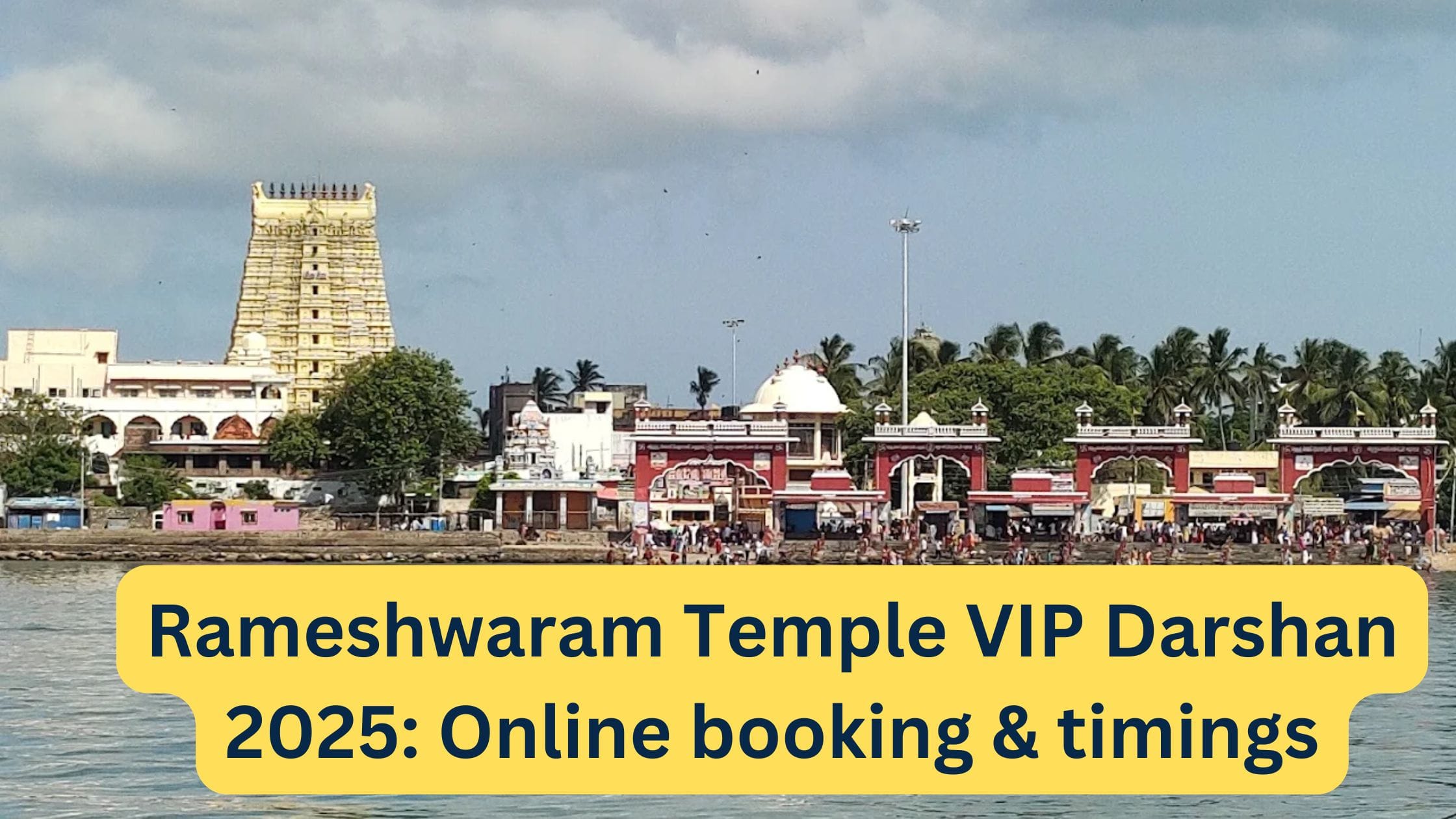
The Arulmigu Ramanathaswamy Temple, popularly known as Rameshwaram Temple or Rameshwaram Jyotirlinga, is one of the most sacred Hindu shrines in India. Located on Rameshwaram Island in Tamil Nadu, this magnificent temple holds the rare distinction of being both one of the twelve Jyotirlingas (sacred shrines of Lord Shiva) and one of the four Char Dham pilgrimage sites (along with Badrinath, Dwarka, and Puri).
According to Hindu mythology, Lord Rama worshipped Lord Shiva at this very spot to absolve himself of the sin of killing Ravana (a Brahmin and great devotee of Shiva) during the epic war described in the Ramayana. Legend states that Sita Devi created a Shivalinga from sand while awaiting Hanuman’s return from Mount Kailash with a sacred lingam, establishing this temple’s profound connection to the Ramayana.

The temple is an architectural marvel of Dravidian style, built primarily between the 12th and 16th centuries by the Pandya Dynasty and later expanded by the Sethupathi rulers of Ramnad. Its most famous feature is the longest temple corridor in the world – stretching 197 meters (east-west) and 133 meters (north-south) – adorned with 1,212 magnificently carved granite pillars.
What makes Rameshwaram Temple truly unique is the presence of 22 sacred wells (Teerthams) within the temple complex. Pilgrims believe that bathing in these holy waters in a prescribed sequence cleanses all sins and brings spiritual purification. The temple also houses two Shivalingas – one made by Sita Devi from sand (Ramalingam) and another brought by Hanuman from Kailash (Vishwalingam) – making it a powerful center of divine energy.
Rameshwaram Temple 2026: Quick Overview
| Aspect | Details |
|---|---|
| Temple Name | Arulmigu Ramanathaswamy Temple (ராமேஸ்வரம் கோவில்) |
| Deity | Lord Shiva (Ramanathaswamy) – Jyotirlinga |
| Location | Rameswaram Island, Ramanathapuram District, Tamil Nadu – 623526 |
| Significance | 12th Jyotirlinga, Char Dham pilgrimage site, Paadal Petra Sthalam |
| Temple Timings | Morning: 5:00 AM – 1:00 PM, Evening: 3:00 PM – 9:00 PM |
| General Darshan | FREE (No entry fee) |
| VIP Quick Darshan | ₹200 per person |
| Special Darshan | ₹100 per person |
| Spatika Lingam Darshan | ₹50 per person (5:00 AM – 6:00 AM) |
| 22 Wells Bath | ₹25 per person (5:30 AM-12:30 PM, 3:00 PM-7:00 PM) |
| Best Time to Visit | October – March (pleasant weather) |
| Major Festivals | Mahashivratri (Feb 15, 2026), Thai Amavasai, Arudra Darshanam |
| Official Website | rameswaramramanathar.hrce.tn.gov.in |
Rameshwaram Temple Timings 2026
Daily Temple Opening & Closing Times
| Session | Timings | Activities |
|---|---|---|
| Temple Opens | 4:00 AM | Temple preparation, morning rituals begin |
| Morning Darshan | 5:00 AM – 1:00 PM | Main darshan hours, all poojas, abhishekams |
| Afternoon Break | 1:00 PM – 3:00 PM | Temple closed for midday rituals |
| Evening Darshan | 3:00 PM – 9:00 PM | Evening darshan, poojas, aarti |
| Temple Closes | 9:00 PM | Final aarti, temple closes for day |
Special Darshan Timings
Spatika Lingam Darshan (Sacred Crystal Lingam):
- Timing: 5:00 AM – 6:00 AM (Only early morning)
- Significance: Darshan during Brahma Muhurta, most auspicious hour
- Ticket: ₹50 per person (available at counter only)
- Reporting: Devotees must report by 4:30 AM
- Special Note: During Dhanurmasa (Dec-Jan), timings change to 3:30 AM – 5:00 AM with 2:00 AM reporting time
Moolasthana Darshan (Main Deity):
- Morning: 6:00 AM – 1:00 PM
- Evening: 3:15 PM – 9:00 PM
- Duration: 1-3 hours depending on crowd
22 Sacred Wells (Teerthams) Bath Timings
- Morning Session: 5:30 AM – 12:30 PM
- Evening Session: 3:00 PM – 7:00 PM
- Duration: 1-2 hours for complete ritual
- Ticket Cost: ₹25 per person
- Location: Inside temple premises
Important: Bathing in 22 Teerthams is optional but highly recommended. Many devotees consider it an integral part of the Rameshwaram pilgrimage.
Daily Pooja Timings at Ramanathaswamy Temple
| S.No | Pooja Name | Pooja Timings |
|---|---|---|
| 1 | Thiruvanandal Pooja | 6:00 AM – 6:15 AM |
| 2 | Vilaa Pooja | 7:00 AM – 7:15 AM |
| 3 | Kalasandhi Pooja | 10:00 AM – 10:15 AM |
| 4 | Uchikkala Pooja | 12:00 PM – 12:15 PM |
| 5 | Sayaraksha Pooja | 6:00 PM – 6:15 PM |
| 6 | Ardhajama Pooja | 8:30 PM – 8:45 PM |
Note: Pooja timings may vary slightly during special occasions and festivals.
Best Time to Visit
Peak Crowd Periods:
- Saturdays, Sundays, Mondays (expect 2-4 hour waits)
- Public holidays
- Shravan month (July-August)
- Kartik month (October-November)
- Festival days (especially Mahashivratri)
- November-January (winter tourist season)
Less Crowded Periods:
- Weekdays (Tuesday-Friday)
- Early morning (5:00 AM – 7:00 AM)
- Late evening (7:00 PM – 9:00 PM)
- Off-season months (April-June, September)
Mahashivratri 2026 at Rameshwaram Temple
Maha Shivratri 2026 Date: Sunday, February 15, 2026
Mahashivratri (The Great Night of Shiva) is the most significant and grandest festival celebrated at Rameshwaram Temple, attracting hundreds of thousands of devotees from across India and the world.
Mahashivratri 2026 Timings and Schedule
Chaturdashi Tithi:
- Begins: February 15, 2026 at 5:04 PM
- Ends: February 16, 2026 at 5:34 PM
Nishita Kaal (Most Auspicious Time):
- Midnight Period: 12:09 AM – 1:01 AM (February 16)
- Duration: 51 minutes of peak spiritual energy
- Significance: Best time for Shiva worship, meditation, abhishekam
Four Prahar Puja Timings (Night-Long Worship)
First Prahar: February 15, 6:11 PM – 9:23 PM
Second Prahar: February 15-16, 9:23 PM – 12:35 AM
Third Prahar (includes Nishita Kaal): February 16, 12:35 AM – 3:47 AM
Fourth Prahar: February 16, 3:47 AM – 6:59 AM
Mahashivratri Parana (Fast Breaking) Time
Date: February 16, 2026 (Monday)
Parana Time: 6:59 AM – 3:24 PM
Ideal Time: Complete before Chaturdashi ends at 5:34 PM
What to Expect at Rameshwaram on Mahashivratri 2026
Temple Activities:
- 24-Hour Darshan: Temple likely to remain open throughout the night
- Continuous Abhishekams: Special Rudrabhishek, Panchamrit Abhishek performed
- Massive Crowds: Lakhs of devotees expected; plan for 4-6 hour darshan wait
- Cultural Programs: Bhajans, kirtans, classical music performances
- Free Annadanam: Community meals served to pilgrims
- Illuminated Temple: Beautiful lighting and decoration
- Narmada/Ganga Abhishekam: Special holy water abhishekams
22 Wells Special Access:
- Extended hours for sacred bath
- Higher bathing fees possible (₹50-₹100)
- Longer queues (2-3 hours wait)
Visitor Tips for Mahashivratri:
- Book accommodation 2-3 months in advance (hotels fill completely)
- Arrive 1-2 days before (February 13-14) to avoid last-minute rush
- Early morning (2-5 AM) darshan relatively faster
- Carry minimal belongings, cash, water, snacks
- Wear comfortable traditional clothes
- Follow all temple rules and security protocols
- Expect massive crowds and long waits – plan for full day visit
- Consider VIP darshan ticket (if available) to save time
Types of Darshan and Ticket Prices 2026
1. General Darshan (FREE)
Cost: ₹0 (Absolutely FREE)
Availability: Open to all devotees daily
Timings: 5:00 AM – 1:00 PM, 3:00 PM – 9:00 PM
Queue: Regular darshan queue
Duration: 1-3 hours depending on crowd
Advantages:
- No cost involved
- Traditional pilgrimage experience
- Spiritual merit of patience
- Accessible to all
Best For:
- Devotees with flexible schedules
- Traditional pilgrims
- Budget travelers
- Off-season visitors (minimal wait)
How to Access:
- Simply walk into temple during darshan hours
- No booking or registration required
- Join general darshan queue
- Follow volunteer instructions
2. Spatika Lingam Darshan (Early Morning Special)
Cost: ₹50 per person
Timings: 5:00 AM – 6:00 AM (Brahma Muhurta)
Reporting Time: 4:30 AM
Booking: Available at temple counter only (no online booking)
About Spatika Lingam:
- Sacred crystal Shivalingam
- Transparent, pure quartz crystal
- Believed to be extremely powerful
- Darshan during most auspicious hour
Significance:
- Brahma Muhurta (time of gods) worship
- Enhanced spiritual benefits
- Peace, clarity, divine blessings
- Rare and sacred sight
Special Dhanurmasa Timings (Mid-December to Mid-January):
- Timings: 3:30 AM – 5:00 AM
- Reporting: 2:00 AM
- Ticket: ₹1,500 per couple (special festival rate)
Best For:
- Early risers seeking profound spiritual experience
- Devotees wanting special blessings
- Those who value sacred dawn worship
3. Quick Entrance Darshan / VIP Darshan
Cost: ₹200 per person
Official Name: Swamy Sannathi Quick Entrance Darshan
Timings: Available throughout darshan hours (5:00 AM – 9:00 PM)
Booking: Online and counter booking available
Features:
- Separate dedicated entrance and queue
- Much faster than general darshan (30-60 minutes typically)
- Organized queue management
- Better crowd control
- Priority access to main sanctum
- Comfortable waiting area
Advantages:
- Saves 2-4 hours compared to free darshan
- Perfect for elderly, children, time-constrained visitors
- Worth the cost on weekends and festivals
- Reduced physical strain
Availability:
- All days of the week
- Subject to daily quota limits
- Book in advance for weekends
Best For:
- Working professionals with limited time
- Families with young children or elderly members
- Weekend and holiday visitors
- First-time visitors wanting hassle-free experience
4. Special Entrance Darshan
Cost: ₹100 per person
Official Name: Swamy Sannathi Special Entrance Darshan
Timings: Available during general darshan hours
Booking: Online and offline available
Features:
- Mid-tier darshan option
- Faster than general darshan
- Separate entry line
- More peaceful experience
- Better than free darshan, more economical than VIP
Duration: Typically 1-1.5 hours
Best For:
- Devotees seeking balance between cost and comfort
- Small families
- Regular pilgrims
- Those wanting organized experience without premium cost
Summary of Darshan Options
| Darshan Type | Cost | Duration | Best Time | Booking |
|---|---|---|---|---|
| General Darshan | FREE | 1-3 hours | Off-peak times | Walk-in |
| Spatika Lingam | ₹50 | 30-45 min | 5-6 AM only | Counter only |
| Special Darshan | ₹100 | 1-1.5 hours | Anytime | Online/Offline |
| VIP Quick Darshan | ₹200 | 30-60 min | Anytime | Online/Offline |
Important Note: Mobile phones and electronic devices are strictly prohibited inside the temple premises. Devotees must deposit these at the cloakroom before entry.
22 Sacred Wells (Teerthams) – Complete Guide
What are the 22 Teerthams?
The 22 sacred wells (Teerthams) inside Rameshwaram Temple are one of its most unique and spiritually significant features. Each well contains holy water with distinct taste, color, and healing properties. Pilgrims believe that bathing in all 22 Teerthams in the prescribed sequence cleanses all sins, cures diseases, and grants moksha (liberation).
According to legend, these wells were created by Lord Rama himself using his arrows to obtain water for performing rituals before crossing to Lanka. The number 22 represents the 22 arrows in Lord Rama’s quiver.
Complete List of 22 Sacred Wells
- Mahalakshmi Theertham – Goddess Lakshmi
- Savithri Theertham – Goddess Savitri
- Gayathri Theertham – Gayatri Mantra deity
- Saraswathi Theertham – Goddess Saraswati
- Sethu Madhava Theertham – Lord Vishnu
- Gandhamadana Theertham – Sacred mountain
- Kavatcha Theertham – Divine armor
- Gavaya Theertham – Sacred cow
- Nala Theertham – Builder of Ram Setu
- Neela Theertham – Blue waters
- Sanku Theertham – Conch shell
- Brahmahathi Vimochana Theertham – Liberation from sin of killing Brahmin
- Suryan Theertham – Sun God
- Chandran Theertham – Moon God
- Ganga Theertham – Holy Ganga
- Yamuna Theertham – Holy Yamuna
- Gaya Theertham – Sacred Gaya
- Kashi Theertham – Holy Varanasi/Kashi
- Sarva Theertham – All sacred waters combined
- Siva Theertham – Lord Shiva
- Sathyamirtha Theertham – Truth nectar
- Ramar Theertham – Lord Rama
22 Wells Bath Process and Procedure
Timings:
- Morning: 5:30 AM – 12:30 PM
- Evening: 3:00 PM – 7:00 PM
- Duration: 1-2 hours for complete ritual
Ticket Cost: ₹25 per person
Step-by-Step Bath Procedure:
Step 1: Entry and Preparation
- Purchase bath ticket at designated counter (₹25)
- Wear appropriate bathing clothes (wet clothes become very heavy)
- Men: Dhoti or shorts
- Women: Saree or modest bathing attire
Step 2: Hire Pilgrim Helper (Optional but Recommended)
- Temple-authorized helpers available (₹100-₹300)
- They guide you through correct sequence
- Pour water over you at each well
- Ensure proper completion of ritual
- Worth the cost for first-time visitors
Step 3: Bathing Sequence
- Follow the prescribed order (helpers know the sequence)
- At each well:
- Stand near the well
- Helper draws water using bucket and rope
- Water poured over your head 2-3 times
- Move to next well immediately
- Complete all 22 wells without breaks
Step 4: Completion
- After 22 wells, change into dry clothes
- Proceed for main temple darshan
- Complete pilgrimage with blessings
Important Tips:
Before the Bath:
- Wear minimal clothing (gets very wet and heavy)
- No valuables, phones, or jewelry
- Secure locker for belongings at cloakroom (small fee)
- Carry extra set of dry clothes
- Towel recommended
During the Bath:
- Follow helper’s instructions carefully
- Don’t drink the water (not potable, ritual only)
- Move quickly between wells (others waiting)
- Maintain sanctity and silence
- Avoid slipping on wet floor
After the Bath:
- Change immediately to avoid catching cold
- Proceed for temple darshan (wet clothes acceptable)
- Many change in designated areas
- Some prefer to visit after bath, some before
Health Considerations:
- Not recommended for very young children (below 5)
- Elderly should consult health before bathing
- People with health conditions: Avoid if risky
- Winter mornings can be very cold
- Summer: Pleasant experience
Duration:
- With helper: 45 minutes – 1 hour
- Without helper (not recommended): 1.5 – 2 hours
Crowd Management:
- Weekdays: Manageable crowds, 30-45 minute wait
- Weekends: Crowded, 1-2 hour wait
- Festivals: Very crowded, 2-3+ hour wait
Is 22 Wells Bath Mandatory?
- Not mandatory for temple darshan
- Highly recommended for complete pilgrimage
- Many devotees consider it essential
- Can have darshan without bathing
- Personal choice based on time, health, comfort
Agni Theertham (Sea Bath)
Location: Outside temple, on the beach
Timing: Early morning before temple visit (traditionally)
Cost: Free
Significance: First purification before temple darshan
Many pilgrims take a holy dip in the Bay of Bengal at Agni Theertham before entering the temple. This is considered the initial purification ritual, followed by 22 wells, and then main darshan.
Abhishekam Services and Prices 2026
What is Abhishekam?
Abhishekam is the sacred ritual of bathing the Shivalinga with holy substances like milk, honey, ghee, coconut water, and sacred Ganga water, accompanied by Vedic mantras and prayers.
Types of Abhishekam at Rameshwaram Temple
| Abhishekam Type | Price | Timings | Significance |
|---|---|---|---|
| Ganga Abhishegam | ₹50 | 12:00 AM – 11:55 PM | Holy Ganga water |
| Spadigalinga Tharisana | ₹501 | Check availability | Spatika Lingam ritual |
| Kodi Theertham Abhishegam | ₹251 | Check availability | Sacred water abhishek |
| Paneer Abhishegam | ₹25 | Available daily | Simple milk abhishek |
| Panchamirtha Abhishegam | ₹3,000 | 12:05 AM – 11:55 PM | Five sacred ingredients |
| Rudra Abhishegam | ₹3,000 | 12:05 AM – 11:55 PM | Vedic Rudra mantras |
| 108 Sangabhishegam | ₹3,000 | 12:00 AM – 7:00 PM | 108 sacred pots |
| 1008 Sangabhishegam | ₹10,000 | By appointment | 1008 sacred pots (grand) |
Note: Prices are approximate and subject to change. Check official website for current rates.
How to Book Abhishekam
Online Booking:
- Visit rameswaramramanathar.hrce.tn.gov.in
- Login or create account
- Select “E-Services” → “Abhishekam Services”
- Choose abhishek type and date
- Make payment online
- Receive confirmation via SMS/email
Offline Booking:
- Visit temple counter
- Request desired abhishek service
- Make payment and collect receipt
- Report on scheduled date and time
Panchamrit Abhishekam (Most Popular)
Cost: ₹3,000
Ingredients: Milk, yogurt, honey, ghee, sugar/jaggery
Duration: 30-45 minutes
Benefits: Prosperity, health, wish fulfillment
What’s Included:
- Complete abhishekam ritual by temple priests
- All puja materials provided
- Vedic mantra chanting
- Personal participation allowed
- Prasadam after completion
Rudra Abhishekam (Powerful Ritual)
Cost: ₹3,000
Mantras: Rudra Sukta, Chamakam
Duration: 45-60 minutes
Benefits: Removal of obstacles, spiritual growth
Significance:
- One of the most powerful Shiva rituals
- Recitation of ancient Vedic hymns
- Grants courage, strength, protection
- Removes negative energies

Rameshwaram Temple Online Darshan Booking 2026
Step-by-Step Online Booking Process
Step 1: Visit Official Website
- Go to https://rameswaramramanathar.hrce.tn.gov.in
- Ensure you’re on the authentic HR&CE Tamil Nadu government website
- Look for official Tamil Nadu government seal
Step 2: User Registration / Login
For New Users:
- Click “New User Registration” or “Sign Up”
- Enter mobile number (10 digits)
- Receive OTP via SMS
- Enter OTP to verify
- Create password
- Provide email address
- Complete registration
For Existing Users:
- Click “Login”
- Enter registered mobile number
- Enter password
- Click “Login” to access dashboard
Step 3: Navigate to Temple Booking Services
- On homepage, locate “Temple Booking Services”
- Click on “E-Services” option
- Alternative: Look for “Online Booking” section
Step 4: Select Darshan Type
From the services list, choose:
- General Darshan (if advance registration desired, though walk-in is free)
- Quick Entrance Darshan (VIP – ₹200)
- Special Entrance Darshan (₹100)
- Spatika Lingam Darshan (₹50 – may not be available online, counter booking preferred)
- 22 Theerthams Bath (₹25)
- Abhishekam Services (various prices)
Step 5: Choose Date and Time
- View calendar of available dates
- Select your preferred darshan date
- Choose available time slot (if applicable)
- Verify availability (green = available, red = booked)
Step 6: Enter Devotee Details
For Each Person:
- Full name (as per ID proof)
- Age
- Gender (Male/Female/Other)
- Date of birth (DD/MM/YYYY)
- Mobile number (for SMS confirmation)
- Email address (for e-ticket)
- Current address
Step 7: Upload Documents
- Select ID type:
- Aadhaar Card (preferred)
- Voter ID
- PAN Card
- Passport
- Driving License
- Enter ID number
- Upload scanned copy/photo (JPG/PNG/PDF, max 2MB)
Step 8: Enter Captcha and Accept Terms
- Enter captcha code displayed
- Read terms and conditions
- Check “I agree to terms and conditions” box
- Verify all entered information
Step 9: Submit Application
- Click “Submit” button
- Review booking summary
- Verify all details one final time
Step 10: Make Payment
- Total amount displayed (₹50/₹100/₹200/₹3,000 etc.)
- Payment options:
- Credit Card (Visa, Mastercard, RuPay)
- Debit Card
- Net Banking (all major banks)
- UPI (Google Pay, PhonePe, Paytm, BHIM)
- Digital Wallets
- Complete secure payment
Step 11: Receive Confirmation
- Booking confirmation page appears
- E-ticket sent to registered mobile number (SMS)
- E-ticket sent to registered email address (PDF)
- Booking reference number displayed
- Save/screenshot confirmation
Step 12: Print E-Ticket
- Download e-ticket PDF from email
- Print physical copy (recommended)
- Save digital copy on phone as backup
- Keep booking reference number handy
Important Online Booking Notes
Booking Window:
- Advance booking typically opens 15-30 days ahead
- Festival seasons: Book as early as possible
- Same-day booking: Limited or unavailable
Ticket Validity:
- Valid only for booked date and time
- Cannot be transferred or changed
- One-time use only
- Carry original ID proof matching booking
Children Policy:
- Children below 5 years: Usually free entry
- Age proof may be required
- Book for all family members for better management
Cancellation:
- Generally, no cancellations or refunds
- Check specific service cancellation policy
- Plan dates carefully before booking
Offline Darshan Ticket Booking
Counter Booking at Temple
Step 1: Visit Temple Premises
- Reach Rameshwaram Temple
- Locate main entrance on East Car Street
Step 2: Find Ticket Counter
- Ticket counters at temple entrance
- Look for signboards indicating darshan types
- Separate counters for:
- Spatika Lingam Darshan
- Quick/Special Darshan
- 22 Wells Bath tickets
- Abhishekam services
Step 3: Request Ticket
- Approach appropriate counter
- Specify darshan type desired:
- “Spatika Lingam Darshan” (₹50)
- “Quick Entrance Darshan” (₹200)
- “Special Darshan” (₹100)
- “22 Theerthams Bath” (₹25)
Step 4: Provide Details
- Name and number of devotees
- ID proof may be requested
- Contact number
Step 5: Make Payment
- Pay ticket price at counter
- Payment modes:
- Cash (most common)
- Card (if POS available)
- UPI (in some counters)
Step 6: Collect Ticket
- Receive physical ticket/receipt
- Verify:
- Darshan type correct
- Number of persons
- Date and time (if applicable)
- Keep ticket safely
Step 7: Use Ticket
- Report to designated entrance
- Show ticket to staff
- Proceed to respective queue
- Follow volunteer instructions
Advantages of Offline Booking:
- Immediate ticket (if available)
- Same-day darshan possible
- No online payment hassles
- Direct interaction for queries
- Suitable for non-tech-savvy pilgrims
Disadvantages:
- Subject to availability on arrival
- May not get preferred time slot
- Queues at ticket counter during peak times
- Cash payment primarily
Required Documents for Darshan and Booking
Mandatory Documents Checklist
1. Government-Issued Photo ID Proof (Original – Essential)
Accepted IDs:
- Aadhaar Card (most preferred)
- Voter ID Card
- PAN Card
- Passport (Indian or valid visa)
- Driving License
- Government Employee ID
ID Requirements:
- Original document must be presented
- Photocopies not accepted for entry
- Name should match booking
- Must be currently valid
- Clear photograph visible
2. Booking Confirmation (If Pre-Booked)
- Printed e-ticket (physical copy)
- OR SMS confirmation on mobile
- Booking reference number
- Date and time details visible
3. Passport-Size Photo (For Some Services)
- 2 recent color photographs
- Required for special poojas/abhishekams
- Not mandatory for regular darshan
4. For Foreigners/NRIs
Additional Documents:
- Passport + Visa copy (foreigners)
- Overseas Citizen of India (OCI) card (if applicable)
- Valid travel documents
5. Age Proof for Children (If Required)
- School ID card
- Birth certificate
- Aadhaar card
- Passport
6. Date of Birth Verification
- Any valid ID showing DOB
- Required for age-restricted services
- Carry when claiming child/senior concessions
Documents to Carry Checklist
Before your Rameshwaram visit:
- [ ] Original government photo ID (Aadhaar/Voter ID/Passport)
- [ ] Printed e-ticket (if booked online)
- [ ] Booking confirmation SMS
- [ ] Passport-size photos (2 copies per person – for special services)
- [ ] Cash in small denominations
- [ ] Age proof for children (if applicable)
- [ ] Emergency contact list
Rameshwaram Temple Dress Code 2026
Strict Traditional Dress Code
The Rameshwaram Temple follows strict dress code regulations to maintain the spiritual sanctity of this sacred Jyotirlinga. Enforcement has become stricter in recent years.
Dress Code for Men
Mandatory/Recommended:
- Traditional Wear: Dhoti, Veshti (Tamil style dhoti)
- Kurta with Pyjama: Traditional combination
- Formal trousers and shirts: Generally permitted now
Allowed:
- Full-length pants with shirt
- Kurta-pajama set
- Covered shoulders (no sleeveless)
Strictly Prohibited:
- Shorts, bermudas, three-fourths
- Jeans (restrictions may vary)
- Lungis (traditional lungi sometimes restricted)
- Torn or dirty clothes
- Sleeveless vests or T-shirts
- Extremely casual or beach wear
Upper Body Rules:
- When entering inner sanctum, men may be asked to remove shirts/vests
- This rule varies by season and crowding
- Bare chest or angavastram (shoulder cloth) allowed inside
- Check with temple authorities on arrival
Dress Code for Women
Mandatory:
- Saree (most traditional and preferred)
- Half-Saree (traditional South Indian attire)
- Churidar/Salwar Kameez with Dupatta (dupatta is essential)
Allowed:
- Traditional Indian attire
- Covered shoulders and knees
- Modest clothing with proper dupatta
Strictly Prohibited:
- Western dresses, skirts, gowns
- Jeans, pants, trousers
- Shorts or short skirts
- Sleeveless or revealing clothes
- T-shirts, tops without dupatta
- Tight-fitting or transparent clothes
Dress Code for Children
Boys:
- Dhoti or traditional pants with shirt
- Kurta-pyjama set
- Modest, clean clothes
Girls:
- Pavadai (traditional long skirt) with blouse
- Half-saree
- Churidar or salwar kameez
- Traditional modest dresses
General Dress Code Guidelines
Footwear:
- Must be removed before entering temple premises
- Dedicated footwear storage/counters available
- Small fee for shoe-keeping (₹5-₹10)
- Walk barefoot in temple complex
Colors:
- Any color acceptable
- White considered most auspicious
- Clean, well-maintained clothes essential
Jewelry and Accessories:
- Minimal jewelry recommended
- Avoid expensive ornaments
- Simple traditional jewelry acceptable
Hair:
- Women: Tied neatly, covered with dupatta respectful
- Men: Clean, well-groomed
What to Avoid:
- Loud, flashy clothing
- Western casuals
- Immodest or revealing attire
- Dirty, torn, or unkempt clothes
- Beach or resort wear
- Sportswear
Enforcement:
- Temple authorities strictly enforce dress code
- Entry may be denied for improper attire
- Better to be overdressed (traditional) than underdressed
- No exceptions for tourists or foreigners
Pro Tips:
- Carry traditional clothes even if traveling in western wear
- Change at hotel/accommodation before temple visit
- Many shops near temple sell dhotis, sarees if you forgot
- When in doubt, go full traditional
How to Reach Rameshwaram Temple 2026
Location and Accessibility
Full Address: Arulmigu Ramanathaswamy Temple East Car Street Rameswaram – 623526 Ramanathapuram District Tamil Nadu, India
Rameswaram Island:
- Connected to mainland by Pamban Bridge (road + rail)
- Surrounded by Bay of Bengal and Indian Ocean
- Island town with temple as main attraction
By Air
Nearest Airport: Madurai International Airport (IXM)
- Distance from Rameshwaram: 175 km (approximately)
- Travel Time: 3 to 3.5 hours by road
- Airport Code: IXM
Flight Connectivity:
- Domestic flights from: Chennai, Bangalore, Delhi, Mumbai, Hyderabad, Kolkata
- International flights: Limited, mostly via Chennai
From Madurai Airport to Rameshwaram:
Option 1: Pre-Paid Taxi
- Available at airport exit
- Cost: ₹2,500 – ₹3,500 (AC sedan)
- Duration: 3-3.5 hours
- Most convenient option
Option 2: Private Taxi/Cab
- Ola, Uber available
- Advance booking recommended
- Cost: ₹2,000 – ₹3,000
Option 3: Bus
- TNSTC (Tamil Nadu State Transport) buses
- From Madurai Mattuthavani Bus Stand (30 km from airport)
- Take auto/taxi to bus stand first (₹300-₹500)
- Bus frequency: Every 30 minutes – 1 hour
- Bus fare: ₹150 – ₹300 depending on type
- Duration: 4-5 hours
By Train
Rameswaram Railway Station
- Station Code: RMM
- Distance from Temple: 2 km (5-10 minute auto ride)
- Connectivity: Well-connected to major South Indian cities
Train Connectivity:
From Chennai:
- Trains: Sethu Express, Rameswaram Express
- Duration: 10-12 hours
- Frequency: Daily trains
From Madurai:
- Trains: Multiple local and express trains
- Duration: 3-4 hours
- Frequency: 4-5 trains daily
- Most convenient rail option
From Bangalore:
- Trains: Via Madurai (change)
- Duration: 12-15 hours total
From Trivandrum:
- Trains: Direct and via Madurai
- Duration: 8-10 hours
Popular Trains to Rameswaram:
- Sethu Express (Chennai-Rameswaram)
- Rameswaram Express
- Pamban Express (from various origins)
From Station to Temple:
- Auto-rickshaws: ₹50-₹100
- Cycle rickshaws: ₹30-₹50
- Walking: 20-25 minutes (2 km)
- Pre-paid auto booth available at station
By Road
Rameshwaram Road Connectivity:
| From City | Distance | Travel Time | Route |
|---|---|---|---|
| Madurai | 175 km | 3-3.5 hours | NH87, SH73 via Paramakudi |
| Chennai | 590 km | 10-11 hours | NH32, NH87 |
| Trichy (Tiruchirappalli) | 285 km | 5-6 hours | NH83, NH87 |
| Kanyakumari | 310 km | 6-7 hours | NH47, SH60 |
| Bangalore | 650 km | 11-12 hours | NH44, NH87 |
| Tuticorin | 165 km | 3-4 hours | NH87 |
Bus Services:
TNSTC (Tamil Nadu State Transport):
- Regular buses from all major Tamil Nadu cities
- Types: Ordinary, Express, Fast, Deluxe, Ultra Deluxe
- Madurai to Rameshwaram: Every 30 min – 1 hour
- Chennai to Rameshwaram: 8-10 buses daily
- Booking: Online at TNSTC website or at bus stands
Private Buses:
- Luxury and semi-luxury options
- More comfortable seating
- AC and non-AC variants
- Advance booking on platforms like RedBus, AbhiBus
Bus Fare Estimates:
- Madurai-Rameshwaram: ₹150 – ₹400 (depending on bus type)
- Chennai-Rameshwaram: ₹600 – ₹1,200
Private Vehicles:
- Well-paved highways
- Scenic route crossing Pamban Bridge
- Parking available near temple (₹20-₹50)
- GPS navigation recommended
Shared Taxis/Cabs:
- Available from Madurai
- Shared: ₹300-₹500 per person
- Private: ₹2,000-₹3,000 full taxi
Local Transportation in Rameshwaram
Within Rameshwaram Town:
- Auto-rickshaws: ₹30-₹100 for local distances
- Cycle Rickshaws: ₹20-₹50
- Local Buses: ₹10-₹30
- Walking: Temple area is compact and walkable
To Nearby Attractions:
- Dhanushkodi: ₹800-₹1,500 round trip (special permits required)
- Abdul Kalam Memorial: ₹100-₹200 round trip
- Gandamadana Parvatham: ₹50-₹100
Accommodation Options Near Rameshwaram Temple
Three Main Accommodation Zones
Zone 1: Temple Street Area (East/West Car Street)
- Distance: 100-500 meters from temple (walking distance)
- Type: Budget lodges, dharamshalas, budget hotels
- Price: ₹300 – ₹1,500 per room/night
- Pros: Extremely close to temple, convenient for early darshan
- Cons: Crowded, noisy, older properties, basic facilities
Zone 2: Main Town Area (near Bus Stand)
- Distance: 1-2 km from temple
- Type: Mid-range hotels, budget to moderate
- Price: ₹800 – ₹2,500 per room/night
- Pros: Quieter, better facilities, newer constructions, transport access
- Cons: Need auto-rickshaw to reach temple (₹30-₹50)
Zone 3: Outskirts/Beach Areas
- Distance: 2-5 km from temple
- Type: Resorts, premium hotels, beach properties
- Price: ₹2,500 – ₹8,000 per room/night
- Pros: Luxury amenities, spacious, peaceful, parking, scenic views
- Cons: Far from temple, requires vehicle
Types of Accommodation
1. Temple Dharamshalas/Chathrams
- Price: ₹200 – ₹800 per room/night
- Facilities: Basic clean rooms, shared bathrooms (some), fans
- Booking: Walk-in or through temple administration
- Best For: Budget pilgrims, traditional experience
2. Budget Lodges
- Price: ₹500 – ₹1,200 per room/night
- Facilities: Fan/AC rooms, attached bathrooms, basic amenities
- Examples: Lakshmi Lodge, Ganesh Lodge, Tamil Nadu Tourism hotels
- Best For: Budget-conscious travelers, short stays
3. Mid-Range Hotels
- Price: ₹1,200 – ₹3,000 per room/night
- Facilities: AC rooms, TV, hot water, room service, restaurant
- Examples: Hotel Royal Park, Hotel MCM Towers, Hotel Aryaas
- Best For: Families, comfortable stays, most popular choice
4. Premium Hotels/Resorts
- Price: ₹3,000 – ₹8,000 per room/night
- Facilities: Luxury rooms, swimming pool, spa, multi-cuisine restaurants
- Examples: Daiwik Hotels, Hyatt Place Rameshwaram
- Best For: Luxury travelers, honeymoon couples, extended stays
5. Homestays
- Price: ₹800 – ₹2,000 per room/night
- Facilities: Home-like environment, homemade meals, local experience
- Booking: Online platforms like Airbnb, YatraDham
- Best For: Families seeking authentic local experience
Booking Tips
Advance Booking:
- Regular season: Book 1-2 weeks ahead
- Weekends: Book 2-3 weeks ahead
- Festivals (Mahashivratri, etc.): Book 2-3 months ahead
- Walk-in during off-season: Usually available
Peak Season (Oct-Mar, Festival times):
- Rooms fill quickly
- Prices may increase 20-50%
- Limited availability
- Quality properties booked first
Off-Season (Apr-Jun, Sep):
- Easy availability
- Better rates (discounts possible)
- More negotiation power
- Can choose from multiple options
Budget Allocation:
- Ultra-budget: ₹300-₹800 (dharamshalas, basic lodges)
- Budget: ₹800-₹1,500 (decent clean rooms)
- Mid-range: ₹1,500-₹3,000 (comfortable stay)
- Premium: ₹3,000+ (luxury experience)
Rameshwaram Temple Contact Information
Official Contact Details
Temple Office:
Phone: +91-4563-242223
Alternative: +91-4563-221223
Temple Address: Arulmigu Ramanathaswamy Temple East Car Street Rameswaram – 623526 Ramanathapuram District Tamil Nadu, India
Email:
- Official inquiries: (Check official website for current email)
- HR&CE Department Tamil Nadu
Official Website:
HR&CE Tamil Nadu (Parent Body):
For Specific Services
Darshan Booking:
- Online: Official website
- Phone inquiries: +91-4563-242223
- Counter: Temple entrance (daily)
Accommodation Near Temple:
- YatraDham: https://yatradham.org
- Phone: +91-70754-78768
Tamil Nadu Tourism:
- Website: https://www.tamilnadutourism.tn.gov.in
- Helpline: 1800-425-7575 (Toll-free)
Emergency Contacts
Police Station:
- Rameswaram Police Station
- Emergency: 100
- Local: +91-4563-221100
Medical Emergency:
- Government Hospital Rameswaram
- Ambulance: 108 (Free)
- Hospital: +91-4563-221234
Tourist Information:
- Tamil Nadu Tourism Office, Rameswaram
- Near Bus Stand
- Phone: +91-4563-221371
Practical Tips for Visiting Rameshwaram Temple
Before Your Visit
1. Plan Duration:
- Minimum: 1 day (temple + 22 wells)
- Recommended: 2 days (temple, 22 wells, Dhanushkodi, relaxation)
- Ideal: 3 days (complete exploration of Rameshwaram)
2. Best Season:
- October-March: Pleasant weather (20°C-30°C)
- Avoid: April-June (very hot, 35°C-45°C)
- Monsoon: July-September (moderate, occasional rains)
3. What to Pack:
- Traditional clothes (mandatory dress code)
- Extra set for 22 wells bath
- Towel for after bath
- Sunscreen and sunglasses (harsh sun)
- Water bottle (stay hydrated)
- Minimal cash (₹2,000-₹3,000)
- Personal medicines
- Light bags (heavy luggage not allowed)
4. Book in Advance:
- Accommodation (2-4 weeks for weekends)
- VIP darshan tickets (online)
- Train/bus tickets (especially festival times)
During Your Visit
5. Temple Visit Strategy:
- Early Morning (5-7 AM): Least crowded, peaceful
- Spatika Lingam: Must-do for early risers (5-6 AM only)
- 22 Wells Bath: Do before main darshan or after (your choice)
- Main Darshan: Mid-morning or evening
- Avoid: 9 AM-12 PM, 4-6 PM (peak crowds on weekends)
6. 22 Wells Tips:
- Hire authorized helper (₹100-₹300 well worth it)
- Wear minimal clothes (gets very wet)
- Carry extra dry clothes
- Use locker for valuables
- Don’t drink the water
- Follow sequence carefully
- Winter mornings: Very cold water, be prepared
7. Photography:
- Strictly prohibited inside sanctum sanctorum
- Outer corridors: Check with authorities (usually restricted)
- Gopurams and exterior: Photography allowed
- 22 wells area: Usually not allowed
- Respect temple photography rules
8. Food and Water:
- Temple provides free Annadanam at certain times
- Many restaurants near temple (pure vegetarian)
- Carry water bottle (refill at temple)
- Avoid street food if sensitive stomach
9. Safety and Security:
- Temple is very safe
- Crowded during festivals – stay alert
- Keep valuables at hotel
- Children: Hold hands in crowds
- Emergency: Contact temple staff/police
10. Etiquette:
- Maintain silence in temple
- No mobile phones inside
- Follow queue discipline
- Respect priests and staff
- Don’t push in crowds
- Be patient during waits
- Dispose waste properly
Cultural Sensitivity
11. Respecting Local Customs:
- Remove footwear before temple entry
- Dress traditionally (strictly enforced)
- Men may remove shirt in inner sanctum
- Women ensure dupatta properly worn
- No leather items near deity
- Prasad received with both hands or right hand
- Circumambulate deity clockwise
12. Spiritual Preparation:
- Many observe fast before darshan
- Early morning bath considered auspicious
- Chant “Om Namah Shivaya” during darshan
- Maintain devotional mindset
- Avoid negative thoughts/conversations
13. Health Considerations:
- Stay hydrated in hot weather
- Wear comfortable footwear (removed before temple, but needed for walking)
- Elderly: Use VIP darshan to avoid long waits
- Children: Carry snacks, water
- Rest adequately between activities
Frequently Asked Questions (FAQs)
Q1: What is Rameshwaram Temple famous for?
A: Rameshwaram Temple is famous as one of the 12 Jyotirlingas of Lord Shiva, one of the Char Dham pilgrimage sites, having the longest temple corridor in the world, 22 sacred wells (Teerthams), and its connection to the Ramayana where Lord Rama worshipped Shiva.
Q2: What are the Rameshwaram Temple timings?
A: Temple opens at 5:00 AM and closes at 9:00 PM with a break from 1:00 PM to 3:00 PM. Morning darshan: 5:00 AM – 1:00 PM, Evening darshan: 3:00 PM – 9:00 PM.
Q3: Is Rameshwaram Temple darshan free?
A: Yes, general darshan is completely FREE. There are optional paid darshan types: Spatika Lingam (₹50), Special Darshan (₹100), and Quick VIP Darshan (₹200).
Q4: When is Mahashivratri 2026 at Rameshwaram?
A: Mahashivratri 2026 will be celebrated on Sunday, February 15, 2026, with night-long worship. The most auspicious Nishita Kaal time is 12:09 AM – 1:01 AM on February 16.
Q5: What are the 22 Theerthams and how much does the bath cost?
A: The 22 Theerthams are sacred wells inside the temple created by Lord Rama. Bathing in all 22 in sequence is believed to cleanse sins. Bath ticket costs ₹25 per person, timings: 5:30 AM-12:30 PM, 3:00 PM-7:00 PM.
Q6: Is bathing in 22 wells mandatory for temple darshan?
A: No, the 22 wells bath is not mandatory. You can have darshan without bathing. However, it’s highly recommended and considered an important part of the Rameshwaram pilgrimage.
Q7: How to book Rameshwaram Temple darshan online?
A: Visit rameswaramramanathar.hrce.tn.gov.in, login/register, select “E-Services,” choose darshan type, enter details, make payment. E-ticket sent via SMS and email.
Q8: What is Spatika Lingam Darshan?
A: Spatika Lingam is a sacred crystal (transparent quartz) Shivalingam. Special early morning darshan (5:00 AM – 6:00 AM) during Brahma Muhurta (most auspicious time). Ticket: ₹50, only counter booking, must report by 4:30 AM.
Q9: What is the dress code for Rameshwaram Temple?
A: Men: Dhoti, kurta-pyjama, or formal pants-shirt (no shorts, jeans may be restricted). Women: Saree, half-saree, or churidar with dupatta (no jeans, pants, western wear). Traditional attire mandatory and strictly enforced.
Q10: Are mobile phones allowed in Rameshwaram Temple?
A: Mobile phones and electronic devices are strictly prohibited inside temple premises. Must be deposited at cloakroom before entry.
Q11: How far is Rameshwaram Temple from Madurai?
A: Rameshwaram is approximately 175 km from Madurai, taking 3-3.5 hours by road. Madurai is the nearest major city with airport and good train connectivity.
Q12: How to reach Rameshwaram Temple?
A: By Air: Fly to Madurai (175 km), then taxi/bus. By Train: Rameshwaram Railway Station (2 km from temple), well-connected. By Road: Regular buses from Madurai, Chennai, other Tamil Nadu cities.
Q13: How many days are sufficient for Rameshwaram visit?
A: 2 days are sufficient to visit Rameshwaram Temple, 22 wells bath, Dhanushkodi, Abdul Kalam Memorial, and Gandamadana Parvatham. 1 day possible but rushed.
Q14: What is the best time to visit Rameshwaram Temple?
A: October to March for pleasant weather (20-30°C). For spiritual significance, Mahashivratri (February) and Thai Amavasai (January-February) are most auspicious.
Q15: What is the cost of Panchamrit Abhishekam?
A: Panchamrit Abhishekam (five sacred ingredients) costs ₹3,000. Includes complete ritual by priests, all materials, Vedic chanting, and prasadam.
Q16: Can foreigners visit Rameshwaram Temple?
A: Yes, foreigners are welcome. Must carry passport + visa copy. Same dress code and rules apply. Respect Hindu customs and temple traditions.
Q17: Are there accommodations near Rameshwaram Temple?
A: Yes, wide range available: Temple dharamshalas (₹200-₹800), budget lodges (₹500-₹1,200), mid-range hotels (₹1,200-₹3,000), luxury resorts (₹3,000-₹8,000) per night.
Q18: What is Agni Theertham?
A: Agni Theertham is the holy sea bath spot on the beach outside the temple. Many pilgrims take a dip in the Bay of Bengal here before temple darshan as initial purification. Free of cost.
Q19: What are the major festivals at Rameshwaram Temple?
A: Major festivals include Mahashivratri (Feb 15, 2026), Thai Amavasai (Jan-Feb), Arudra Darshanam (Dec-Jan), Navratri (Sep-Oct), and various monthly Pradosham days.
Q20: Is Rameshwaram part of Char Dham?
A: Yes, Rameshwaram is one of the four Char Dham pilgrimage sites along with Badrinath (North), Dwarka (West), and Puri (East). Completing all four is considered highly meritorious.
Q21: Why is Rameshwaram Temple corridor famous?
A: Rameshwaram Temple has the longest temple corridor in the world – 197 meters (east-west) and 133 meters (north-south) – with 1,212 magnificently carved granite pillars. It’s an architectural marvel.
Q22: Can we touch the Shivalinga in Rameshwaram?
A: Direct touching is generally not allowed during regular darshan. However, during special sevas and abhishekams where you personally participate, closer access may be permitted. Check with temple authorities.
Q23: What is the significance of two Shivalingas?
A: Rameshwaram has two Shivalingas: Ramalingam (made by Sita from sand) and Vishwalingam (brought by Hanuman from Kailash). Both are worshipped, symbolizing devotion and divine grace.
Q24: How long does 22 wells bath take?
A: With authorized helper: 45 minutes – 1 hour. Without helper: 1.5 – 2 hours. Add queue waiting time (30 min – 2 hours depending on crowd).
Q25: What should I do after Rameshwaram Temple darshan?
A: After temple, visit Dhanushkodi (20 km, where Ram Setu begins), Abdul Kalam Memorial, Gandamadana Parvatham (footprints of Lord Rama), Five-faced Hanuman Temple, and Kothandaramaswamy Temple.
Nearby Attractions and Day Trips
Must-Visit Places Near Rameshwaram
1. Dhanushkodi
- Distance: 20 km from Rameshwaram
- Significance: Where Lord Rama built Ram Setu (Adam’s Bridge) to Lanka
- Highlights: Ghost town, confluence of Bay of Bengal and Indian Ocean, serene beach
- Cost: ₹800-₹1,500 for taxi round trip
- Note: Special permits required; only certain vehicles allowed
2. Abdul Kalam Memorial
- Distance: 8 km from temple
- Dedicated to: Dr. APJ Abdul Kalam (former President of India)
- Features: Memorial, museum, personal belongings
- Entry: ₹10-₹20
- Timings: 9:00 AM – 5:00 PM
3. Gandamadana Parvatham
- Distance: 2 km from temple
- Significance: Footprints of Lord Rama
- Highlights: Two-story mandapam, panoramic view of Rameshwaram
- Entry: Free
4. Panchmukhi (Five-Faced) Hanuman Temple
- Distance: 2 km from temple
- Deity: Five-faced Hanuman
- Significance: Rare five-faced Hanuman idol
- Timings: 6:00 AM – 8:00 PM
5. Kothandaramaswamy Temple
- Distance: 12 km from Rameshwaram
- Significance: Where Vibhishana surrendered to Lord Rama
- Highlights: Survived 1964 cyclone that destroyed Dhanushkodi
- Scenic location on the shore
Conclusion
Rameshwaram Temple (Arulmigu Ramanathaswamy Temple) stands as one of the most sacred and spiritually powerful pilgrimage destinations in India. This divine Jyotirlinga, blessed with the longest temple corridor in the world and 22 sacred Theerthams, offers devotees a profound connection to both Lord Shiva and Lord Rama through its unique Ramayana heritage.
Whether you visit during the grand celebration of Mahashivratri 2026 on February 15, seek the peaceful early morning Spatika Lingam darshan, take the purifying bath in the 22 holy wells, or simply experience the architectural marvel of the temple’s corridors, Rameshwaram promises a transformative spiritual journey that touches the soul.
The temple’s dual significance as both a Jyotirlinga and Char Dham site makes it a must-visit for every devout Hindu. The belief that “a pilgrimage to Kashi (Varanasi) is incomplete without visiting Rameshwaram” underscores its paramount importance in the Hindu spiritual landscape.
Key Takeaways for Your 2026 Visit:
- Free Darshan Available: General darshan is completely free
- VIP Options: ₹50 (Spatika), ₹100 (Special), ₹200 (Quick) for faster access
- 22 Wells Essential: ₹25 bath considered integral to complete pilgrimage
- Dress Code Strict: Traditional attire mandatory, strictly enforced
- Book Ahead: Accommodation 2-4 weeks early; 2-3 months for festivals
- Best Season: October-March for weather; Mahashivratri for spiritual merit
- Plan 2 Days: Adequate time for temple, 22 wells, Dhanushkodi exploration
- Mobile Phones Prohibited: Leave at cloakroom before entry
May your pilgrimage to Rameshwaram Temple be blessed with the divine grace of Lord Ramanathaswamy and Goddess Parvati. May the sacred waters of the 22 Theerthams purify your soul, and may the darshan of the Jyotirlinga bring peace, prosperity, and spiritual enlightenment to your life.
Om Namah Shivaya!
Jai Shri Ram!
would like to know that how many persons are allowed to PANCHAMITRA ABHISEKAM
Hi
hi