
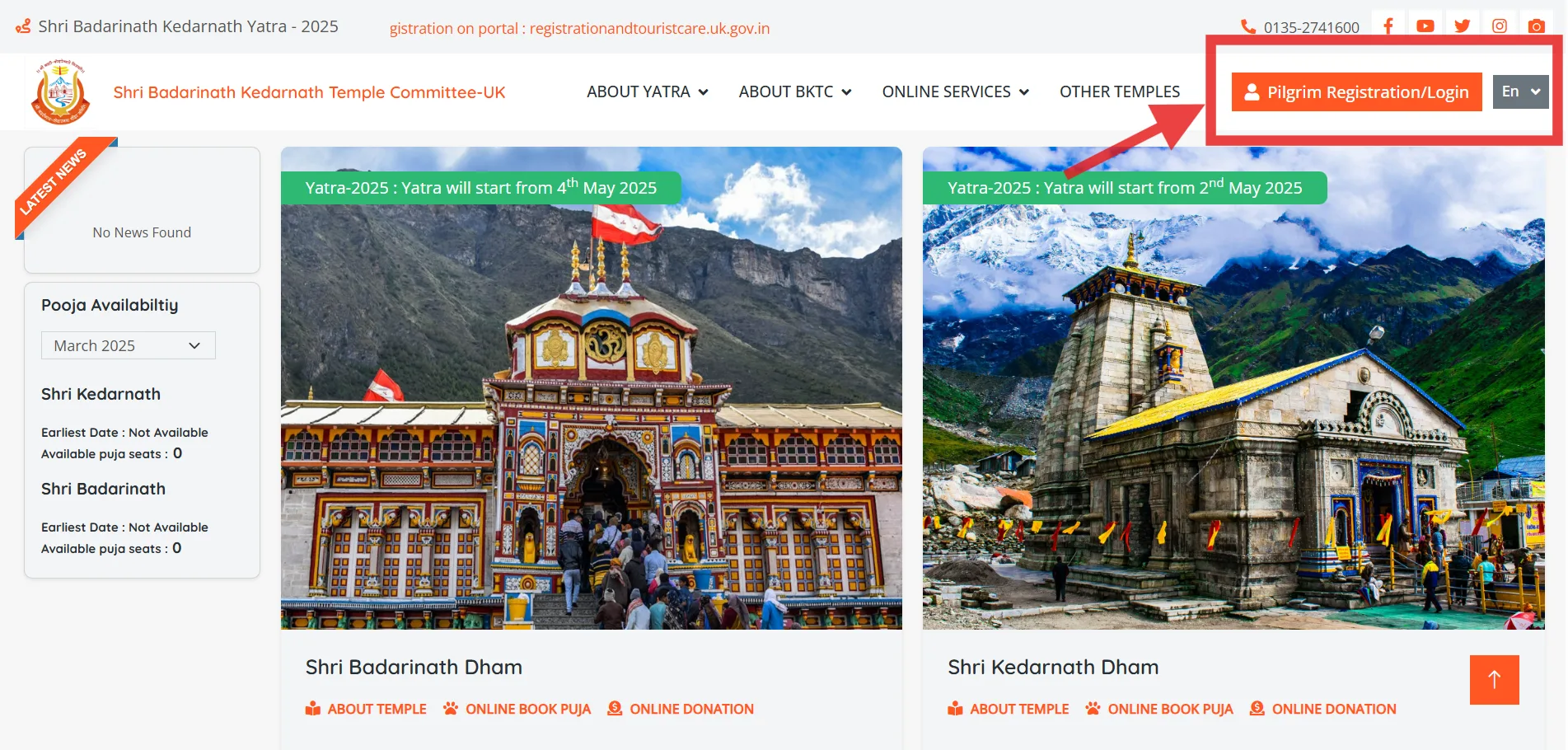
The sacred Badrinath Temple, one of the holiest shrines in Hinduism and a jewel of the Char Dham pilgrimage, is preparing to welcome devotees in 2026. Dedicated to Lord Vishnu in his Badrinarayan form, this ancient temple nestled in the Garhwal Himalayas offers a profound spiritual experience amidst breathtaking natural beauty.
Badrinath Temple VIP Darshan Timings, Ticket Prices and Pooja Booking
Badrinath Temple Opening Date 2026
Opening Date: April 24, 2026 (tentative)
The exact opening date for Badrinath Temple 2026 will be officially announced on Basant Panchami, which falls on February 15, 2026. The announcement is made from the royal court of Tehri Naresh in Narendra Nagar, following centuries-old traditions.
Closing Date: November 6-13, 2026 (tentative)
The closing date will be announced on Vijayadashami (Dussehra). The temple typically closes on Bhai Dooj in early November.
Important Note: These dates are subject to official confirmation by the Shri Badrinath-Kedarnath Temple Committee (BKTC). Weather conditions and Hindu lunar calendar calculations determine the final dates.
Overview of Badrinath Temple
| Category | Details |
|---|---|
| Location | Badrinath, Chamoli District, Uttarakhand, India |
| Altitude | 3,133 meters (10,279 feet) above sea level |
| Dedicated To | Lord Vishnu (as Badrinarayan) |
| Temple Type | Hindu Temple – Vaishnavite Shrine |
| Significance | One of the Char Dham and Chota Char Dham pilgrimage sites |
| Main Deity | Lord Badrinarayan (Lord Vishnu in meditative pose) |
| Established By | Adi Shankaracharya (8th century CE) |
| Architectural Style | Traditional North Indian architecture with vibrant facade |
| Opening Season | April/May (around Akshaya Tritiya) |
| Closing Season | October/November (after Diwali/on Bhai Dooj) |
| Open Duration | Approximately 6 months annually |
| Main Festivals | Mata Murti Ka Mela, Badri-Kedar Utsav, Janmashtami |
| Winter Deity Location | Narasimha Temple, Joshimath |
| Best Months to Visit | May to June and September to October |
| Nearest Airport | Jolly Grant Airport, Dehradun (approx. 315 km) |
| Nearest Railway Station | Rishikesh (approx. 295 km) |
| Distance from Haridwar | Approximately 320 km by road |
Badrinath Temple Darshan Timings 2026
The temple follows specific darshan timings throughout its open season:
Morning Darshan
- Opening Time: 4:30 AM (for special pujas like Abhishek)
- General Darshan: 6:00 AM – 12:00 PM / 1:00 PM
Afternoon Break
- Temple Closed: 12:00 PM / 1:00 PM – 3:00 PM / 4:00 PM
- During this period, the deity is offered bhog (food offerings) and the temple is cleaned
Evening Darshan
- Opening Time: 3:00 PM / 4:00 PM
- Closing Time: 9:00 PM
Important Timings Notes
- Timings may vary slightly during peak season vs. late season
- Special pujas occur during specific time slots
- Shayan Aarti (closing ceremony) timing depends on the queue length
- Winter months: Temple remains completely closed
Types of Darshan at Badrinath Temple
1. Sarva Darshan (General Darshan)
- Cost: FREE
- Process: Join the regular queue
- Wait Time: 1-3 hours depending on crowd
- Best For: All pilgrims seeking blessings
2. VIP Darshan / Special Puja
- Cost: ₹300 – ₹5,100 per person
- Booking: Online or offline at temple counters
- Benefits:
- Faster access to sanctum
- Reduced waiting time
- Priority entry
- More peaceful darshan experience
- Best For: Elderly, families with children, time-constrained pilgrims
3. Mahabhishek Puja (Premium VIP Darshan)
- Cost: ₹4,700 per person
- Timing: 4:30 AM – 6:30 AM
- Benefits:
- Earliest access to temple
- Participation in sacred Abhishek ceremony
- Extended darshan time (30 minutes to 1 hour)
- Most exclusive experience
Online Registration and Puja Booking
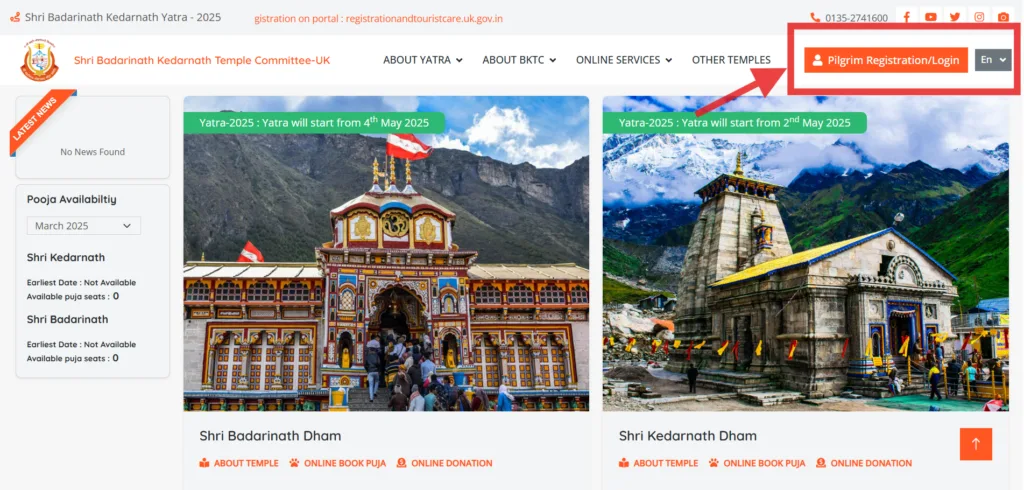
Step 1: Yatra Registration (Mandatory)
All pilgrims must register online before visiting Badrinath Temple in 2026.
- Visit the official website: https://badrinath-kedarnath.gov.in
- Click on “Pilgrims Registration” or “Online Registration” (usually in the top right corner)
- Click on “Register” if you’re a new user
- Enter the following details:
- Mobile number
- Full name
- Gender
- Email ID
- Captcha verification
- Click “Register”
- An OTP will be sent to your registered mobile number and email
- Enter the OTP and submit
- A password will be sent to your mobile number and email
- Login using your mobile number and the received password
- You’ll be prompted to create a new password
- Re-enter the new password and click “Create”
- Your registration is complete!
Important: Save your login credentials for future bookings and puja reservations.
Step 2: Online Puja Booking
Once registered, you can book special pujas online:
- Login to the official website using your mobile number and password
- Navigate to “Puja Booking” or “Book Puja Online”
- Select “Badrinath Temple” from the list of available temples
- Read and accept all Terms and Conditions
- Click “Proceed”
- Select the Puja Type from available options:
- Early Morning Pujas (Abhishek, Mahabhishek)
- Special Pujas
- Day Pujas (entire day)
- Evening Aarti/Puja/Path
- Daily/Periodical Bhog
- Add to Cart and select the number of devotees participating
- Click “Proceed Further”
- Enter devotee details for each participant:
- Full name
- Gender
- Photo ID proof type (Aadhaar/Passport/Voter ID/Driving License/PAN)
- ID proof number
- Age
- Address (Country, State, District, Pincode)
- Mobile number
- Email ID
- Upload valid Photo ID proof
- Review all details carefully
- Proceed to Payment
- Complete payment using:
- Credit/Debit Card
- Net Banking
- UPI (PhonePe, Google Pay, Paytm, etc.)
- Download the confirmation receipt/e-slip
- Print the receipt and carry it along with original ID proof to the temple
Online Booking Important Notes
✅ Booking opens well in advance of the temple opening date
✅ VIP darshan slots are limited – book early during peak season
✅ All payments are non-refundable and non-transferable
✅ Devotees must carry original ID proof matching the booking
✅ For foreign pilgrims, a valid passport and visa are required
✅ Arrive at the puja counter at least 15-20 minutes before the scheduled time
Types of Pujas Available at Badrinath Temple
Early Morning Pujas (4:30 AM – 6:30 AM)
- Mahabhishek: ₹4,700 per person (VIP Darshan included)
- Abhishek: Sacred bathing ceremony of the deity
- Laghurudrabhishek: Shorter Rudrabhishek ceremony
- Suprabhatam: Morning awakening hymns
Special Pujas (4:00 AM – 8:00 PM)
- Rudrabhishek: Worship with Vedic mantras
- Sodasopachar: 16-step worship ritual
- Various customized pujas
Day Pujas (7:30 AM – 12:00 PM & 3:00 PM – 6:00 PM)
- Entire Day Puja: Full-day worship on behalf of devotee
- Ved Path: Vedic recitation
- Geeta Path: Bhagavad Gita recitation
Evening Aarti/Puja/Path (6:00 PM – 7:45 PM / 8:30 PM)
- Evening Aarti: ₹300-500 per person
- Geet Govind: Divine songs in praise of Lord Krishna
- Shayan Aarti: Temple closing ceremony (no fixed time)
Daily/Periodical Bhog
- Atka Bhog: Donation for daily food offerings to the deity
- Nirmalya Chandan/Tulsi Prasad: Sent annually for 5 years
Puja Pricing Summary
| Puja Type | Approximate Cost | Attendance Required |
|---|---|---|
| Mahabhishek | ₹4,700 | Yes (Early morning) |
| Abhishek | ₹2,000-3,000 | Yes |
| Rudrabhishek | ₹1,500-2,500 | Yes |
| Laghurudrabhishek | ₹1,000-1,500 | Yes |
| Evening Aarti | ₹300-500 | Yes (arrive 15-20 min early) |
| Ved Path | ₹500-1,000 | No (performed by priests) |
| Geeta Path | ₹500-1,000 | No (performed by priests) |
| Entire Day Puja | ₹3,000-5,000 | No |
| Atka Bhog | Variable donation | No |
Note: Prices are approximate and may change. Check the official website for current rates.
VIP Darshan Booking Guide
Online VIP Darshan Booking
- Visit https://badrinath-kedarnath.gov.in
- Register/Login with your mobile number
- Select “Puja Services” or “VIP Darshan”
- Read and accept Terms and Conditions
- Select your preferred puja (Mahabhishek for VIP access)
- Add to cart and provide devotee information
- Upload valid ID proof (Aadhaar/Passport/Driving License)
- Complete online payment
- Download the e-slip/confirmation receipt
- Carry the e-slip and original ID proof to the temple
Offline VIP Darshan Booking
- Visit the VIP Darshan booking counter near Badrinath Temple
- Check availability of slots
- Select your preferred VIP ticket/Puja
- Provide all required information and ID proofs
- Pay the required amount in cash (cards/UPI may not be accepted)
- Receive a confirmation slip
- Show the slip at the VIP entry gate
VIP Darshan Tips
✅ Book well in advance, especially during peak season (May-June, September-October)
✅ Carry both soft copy (phone) and hard copy (printed) of your booking
✅ Always carry the exact cash amount for offline bookings
✅ Arrive at the temple gate before your allotted time
✅ After the scheduled time, VIP access may not be allowed
✅ VIP darshan is particularly beneficial for elderly and differently-abled pilgrims
How to Reach Badrinath Temple
Badrinath is well-connected by road, with the nearest airport and railway stations in Uttarakhand.
By Air
Jolly Grant Airport, Dehradun
- Distance: Approximately 315 km from Badrinath
- Flight connections from major Indian cities
- From airport, hire taxi or take bus to Badrinath (8-10 hours)
- Helicopter Services: Available from Dehradun (Sahastradhara) to Badrinath
- Reduces travel time significantly
- Can be booked online through tour operators
- Premium service with limited seats
By Train
Rishikesh Railway Station
- Distance: Approximately 295 km from Badrinath
- Well-connected to Delhi, Mumbai, Kolkata, and other major cities
- From Rishikesh:
- Take taxi/cab (7-9 hours to Badrinath)
- Board GMOU/Uttarakhand Roadways buses
- Join Char Dham tour packages
Haridwar Railway Station
- Distance: Approximately 320 km from Badrinath
- Major rail junction with excellent connectivity
- Buses and taxis available to Badrinath
By Road
Badrinath has excellent road connectivity:
From Delhi: 525 km (12-14 hours)
- Route: Delhi → Haridwar → Rishikesh → Devprayag → Srinagar → Rudraprayag → Karnaprayag → Joshimath → Badrinath
From Haridwar: 320 km (9-11 hours)
- Route: Haridwar → Rishikesh → Devprayag → Rudraprayag → Karnaprayag → Joshimath → Badrinath
From Rishikesh: 295 km (8-10 hours)
- Route: Rishikesh → Devprayag → Rudraprayag → Karnaprayag → Joshimath → Badrinath
Transport Options:
- GMOU Buses: Government buses from Rishikesh and Haridwar
- Private Buses: Deluxe and semi-deluxe options available
- Shared Taxis: Available from Rishikesh, Haridwar, Joshimath
- Private Taxis: Can be hired for entire journey
- Char Dham Tour Packages: Complete pilgrimage packages with transport, accommodation, and meals
Road Conditions
- Roads are generally well-maintained but mountainous
- Landslides possible during monsoon (July-August)
- Check road status before traveling
- Winter closure: Roads blocked by snow from November to March
Accommodation Near Badrinath Temple
Badrinath offers a wide range of accommodation options to suit all budgets:
Government Guest Houses (GMVN)
- Managed by: Garhwal Mandal Vikas Nigam
- Facilities: Clean rooms, hot water, meals, parking
- Booking: Can be done online through GMVN website
- Price Range: ₹800 – ₹3,000 per night
Dharamshalas
- Run by: Temple committee and charitable trusts
- Facilities: Basic accommodation, shared bathrooms, meals
- Price Range: ₹200 – ₹800 per night
- Best For: Budget pilgrims
Private Hotels
- Categories: Budget to 3-star properties
- Facilities: Attached bathrooms, hot water, room service, restaurants
- Price Range: ₹1,000 – ₹5,000 per night
- Booking: Online through hotel websites, travel portals, tour operators
Accommodation Booking
- Advance Booking Recommended: Especially for May-June and September-October
- Peak Season: Book 2-3 months in advance
- On-the-Spot: Limited availability, risky during peak periods
- Capacity: Badrinath can accommodate 15,000-20,000 pilgrims at a time
Nearby Towns with Accommodation
- Joshimath (45 km): More hotel options, can stay here and visit Badrinath as day trip
- Mana Village (3 km): Last Indian village, limited accommodation
- Govindghat (25 km): Base for Valley of Flowers trek, some hotels available
Places to Visit Near Badrinath Temple
Within Badrinath Complex
1. Tapt Kund
- Natural hot water spring
- Temperature: 45-55°C
- Pilgrims take holy dip before darshan
- Believed to have medicinal and purifying properties
- Located right outside the temple entrance
2. Narad Kund
- Source of Tapt Kund
- Associated with Sage Narada
- Sacred bathing spot
3. Brahma Kapal
- Flat platform on Alaknanda River banks
- Pilgrims perform last rites (shraddha) for ancestors
- Highly auspicious for pind daan
4. Sheshnetra
- Impression of legendary serpent Sheshnag
- Near Tapt Kund
- Boulder with eye-shaped mark
Nearby Attractions (3-10 km)
5. Mana Village
- Distance: 3 km from Badrinath
- Last inhabited village on Indo-Tibet border
- Home to Ganesh Gufa and Vyas Gufa
- Bheem Pul (natural rock bridge)
- Saraswati River origin point
6. Vasudhara Falls
- Distance: 5 km trek from Mana Village
- 400 feet high waterfall
- Trekking required (moderate difficulty)
- Stunning natural beauty
7. Charanpaduka
- Distance: 3 km from Badrinath
- Rock believed to have Lord Vishnu’s footprints
- Requires uphill trek
- Panoramic views of Neelkanth Peak
8. Satopanth Lake
- Distance: 25 km trek from Mana
- High-altitude glacial lake
- Triangular shape (associated with Trinity)
- Trekking expedition required (4-5 days)
Nearby Religious Sites (40-50 km)
9. Narasimha Temple, Joshimath
- Distance: 45 km from Badrinath
- Winter abode of Lord Badrinath
- Ancient temple established by Adi Shankaracharya
- Lord Badrinath’s idol is worshipped here from November to April
10. Hemkund Sahib
- Distance: 40 km from Badrinath
- Sacred Sikh pilgrimage site
- High-altitude gurudwara (4,632 meters)
- Open only from June to October
- Stunning glacial lake
11. Valley of Flowers
- Distance: 45 km from Badrinath (via Govindghat)
- UNESCO World Heritage Site
- Alpine meadow with 300+ flower species
- Best time: July-August
- Trekking required
Badrinath Temple Rules and Guidelines
Dress Code
✅ Men: Dhoti, kurta-pajama, or traditional attire preferred; no shorts or sleeveless shirts ✅ Women: Saree, salwar kameez, or traditional attire preferred; no shorts, sleeveless tops, or revealing clothes ✅ All Pilgrims: Modest, warm clothing recommended due to cold weather
Items Not Allowed
❌ Mobile phones (must be deposited at counter)
❌ Cameras and electronic devices
❌ Leather items (belts, wallets, shoes)
❌ Food items
❌ Tobacco and alcohol
Temple Etiquette
✅ Remove shoes before entering temple premises
✅ Take bath in Tapt Kund before darshan (traditional practice)
✅ Maintain silence and decorum inside temple
✅ Do not touch the deity or offer flowers directly (priests will assist)
✅ Follow priest’s instructions during puja
✅ No photography or videography inside sanctum
Health and Safety
✅ Acclimatize to high altitude (spend time in Joshimath if needed)
✅ Stay hydrated
✅ Avoid over-exertion
✅ Carry basic medicines
✅ Consult doctor before traveling if you have health conditions
✅ Elderly and children should take extra precautions
What to Carry for Badrinath Yatra
Essential Clothing
- Warm woolens (sweater, jacket, thermals)
- Gloves, cap, and socks
- Comfortable walking shoes (non-leather)
- Rain gear (umbrella, raincoat)
- Traditional attire for temple visit
- Extra pair of clothes
Important Documents
- Original government-issued photo ID (Aadhaar, Passport, Driving License, Voter ID)
- Yatra registration confirmation
- Puja/darshan booking receipts (if booked)
- Travel tickets and hotel bookings
- Emergency contact information
Medical Kit
- Personal prescription medicines
- Altitude sickness tablets (Diamox – consult doctor)
- Pain relievers (headache, body pain)
- Digestive medicines
- First-aid kit (band-aids, antiseptic)
- Oxygen cylinder (optional, for elderly)
Other Essentials
- Water bottle
- Dry snacks and energy bars
- Torch/flashlight
- Power bank for phone
- Small backpack
- Cash (ATMs may not be readily available)
- Sunscreen and lip balm
- Sunglasses
Best Time to Visit Badrinath Temple
Peak Season: May to June
Weather: Pleasant, clear skies, 10-18°C Pros:
- Temple freshly opened after winter
- Best weather conditions
- Clear views of Himalayan peaks
- Maximum facilities available
Cons:
- Extremely crowded
- Long waiting times for darshan
- Higher accommodation costs
- Advance booking essential
Ideal Season: September to October
Weather: Post-monsoon, crisp air, 5-15°C Pros:
- Less crowded than May-June
- Crystal clear skies
- Beautiful autumn colors
- Moderate wait times
- Better availability of accommodation
Cons:
- Temperature drops in late October
- Temple closing approaching
Avoid: July to August
Weather: Monsoon season, heavy rainfall Risks:
- Landslides and road blockages
- Poor visibility
- Dangerous travel conditions
- Temple may close temporarily
Only visit if absolutely necessary and stay updated on weather and road conditions.
Winter Closure: November to April
- Temple completely closed
- Deity moved to Narasimha Temple, Joshimath
- Roads blocked by heavy snow
- No pilgrim access to Badrinath
Char Dham Yatra 2026 – Complete Pilgrimage
Badrinath is part of the revered Char Dham Yatra circuit. Here are the 2026 opening dates for all four temples:
| Temple | Opening Date 2026 | Closing Date 2026 |
|---|---|---|
| Yamunotri | April 19, 2026 (Akshaya Tritiya) | November 6, 2026 (Bhai Dooj) |
| Gangotri | April 19, 2026 (Akshaya Tritiya) | November 6, 2026 (Bhai Dooj) |
| Kedarnath | April 22, 2026 | November 6, 2026 |
| Badrinath | April 24, 2026 | November 6-13, 2026 (Bhai Dooj) |
Traditional Char Dham Route
Duration: 10-12 days by road
Route: Haridwar/Rishikesh → Yamunotri → Gangotri → Kedarnath → Badrinath → Return
Package Options:
- Budget packages: ₹15,000 – ₹25,000 per person
- Standard packages: ₹25,000 – ₹40,000 per person
- Luxury packages: ₹40,000 – ₹75,000 per person
- Helicopter packages: ₹1,50,000 – ₹2,50,000 per person
Mythology and History of Badrinath Temple
Legend of Badrinath
According to Hindu mythology, Lord Vishnu performed intense penance (tapasya) at this location for thousands of years. The harsh Himalayan weather with scorching sun made the meditation extremely difficult. Goddess Lakshmi, his divine consort, took the form of a Badri tree (Indian jujube/ber tree) and stood between Lord Vishnu and the sun, providing him shade and protection.
When Lord Vishnu completed his meditation and opened his eyes, he saw Goddess Lakshmi standing as the Badri tree. Moved by her devotion and sacrifice, he named the place “Badrikashram” – the hermitage of Badri. Thus, the temple came to be known as Badrinath (Lord of Badri).
Historical Significance
- Ancient Origins: The temple is believed to date back to the Mahabharata era, though its exact age is unknown
- Adi Shankaracharya: The great 8th-century philosopher and saint revived and renovated the temple, establishing it as a major pilgrimage center
- Buddhist Influence: Historical evidence suggests the site was once a Buddhist shrine, which explains some architectural similarities to Buddhist viharas
- Royal Patronage: The temple has been renovated multiple times by various rulers, including the Garhwal kings
- Current Structure: Much of the present structure dates to the 16th century
Architectural Marvel
- Construction Material: Stone and wood
- Style: Traditional Garhwali architecture with North Indian temple design
- Height: Approximately 15 meters tall
- Facade: Brightly painted in blue, yellow, red colors
- Dome: Gold-plated canopy (donated by Queen Ahilyabai Holkar)
- Entrance: Flight of steps leading to the main gate
- Conical Top: Distinctive cone-shaped peak
Temple Complex Layout
1. Garbha Griha (Sanctum Sanctorum)
- Houses the main deity: 1-meter tall black stone idol of Lord Badrinarayan
- Deity seated in Padmasana (lotus meditation pose)
- Covered by a gold-plated canopy
2. Darshan Mandap
- Area where rituals and ceremonies are conducted
- Priests perform pujas here
- Devotees witness the ceremonies
3. Sabha Mandap
- Assembly hall where devotees gather
- Space for prayers and chanting
4. Other Deities in Complex
- Kuber (God of wealth)
- Sage Narada
- Uddhava (Krishna’s devotee)
- Nar and Narayan (twin sages)
- Goddess Lakshmi
- Garuda (Lord Vishnu’s vehicle)
- Navadurga (nine forms of Goddess Durga)
Badrinath Temple Contact Information
Official Website
Main Portal: https://badrinath-kedarnath.gov.in
Services Available Online:
- Yatra registration
- Puja booking
- Darshan booking
- Accommodation information
- Latest updates and announcements
Helpline Numbers
General Enquiry & Online Services:
- Primary: +91-7302257116
- Call Center: 0135-2741600
Pilgrims Helpline for Badrinath:
- Dedicated Line: +91-8979001008
Online Services/International Pilgrims:
- Phone: +91-7302257116
Media Related Queries:
- Phone: +91-7302257115
Publicity Office (Rishikesh):
- Phone: 0135-2430261
Narasimha Temple (Joshimath):
- Phone: +91-8979001008
Head Office Address
Shri Badrinath-Kedarnath Temple Committee Saket, Lane No. 7, Canal Road, Dehradun, Uttarakhand – 248001, India
Email Contacts
- General Inquiries: support-ucdb@uk.gov.in
- Donation Queries: (Check official website)
- Accommodation: (Check official website)
Emergency Contacts
- Local Police: Available at Badrinath police station
- Medical Facilities: Primary health center near temple
- Disaster Management: Uttarakhand government helpline
Frequently Asked Questions (FAQs)
Q1: When will Badrinath Temple open in 2026? A: The tentative opening date is April 24, 2026. The exact date will be announced on Basant Panchami (February 15, 2026) by the temple committee.
Q2: When does Badrinath Temple close in 2026? A: The tentative closing date is between November 6-13, 2026, on Bhai Dooj. The exact date will be announced on Vijayadashami (Dussehra).
Q3: Is online registration mandatory for Badrinath Yatra? A: Yes, all pilgrims must register online through the official website https://badrinath-kedarnath.gov.in before visiting the temple.
Q4: How can I book VIP Darshan at Badrinath Temple? A: VIP Darshan can be booked online through the official website or offline at the temple’s administrative counter. It’s recommended to book in advance during peak season.
Q5: What are the darshan timings at Badrinath Temple? A: The temple is open from 4:30 AM to 1:00 PM and 4:00 PM to 9:00 PM. Timings may vary slightly based on season and special occasions.
Q6: Is there a dress code for the temple? A: Yes. Pilgrims should wear modest, traditional attire. Men should wear dhoti or traditional clothes; women should wear saree or salwar kameez. Shorts, sleeveless tops, and revealing clothes are not allowed.
Q7: Are mobile phones and cameras allowed inside the temple? A: No. Mobile phones, cameras, and electronic devices are strictly prohibited inside the temple premises. They must be deposited at the designated counter.
Q8: Can I book accommodation near Badrinath Temple? A: Yes. Accommodation booking options include GMVN guest houses, dharamshalas, and private hotels. Book in advance, especially during May-June and September-October.
Q9: How do I reach Badrinath Temple? A: Badrinath is accessible by road from Haridwar (320 km), Rishikesh (295 km), and Delhi (525 km). The nearest airport is Jolly Grant, Dehradun (315 km), and the nearest railway station is Rishikesh (295 km). Helicopter services are also available from Dehradun.
Q10: What is Tapt Kund? A: Tapt Kund is a natural hot water spring located at the temple entrance. Pilgrims traditionally take a holy dip here before darshan, as it’s considered purifying and has medicinal properties.
Q11: Can senior citizens and differently-abled pilgrims visit easily? A: Yes. The temple has a sloped pathway and basic support facilities. VIP darshan can be arranged to minimize waiting time and physical strain.
Q12: What should I carry for the Badrinath Yatra? A: Carry warm woolens, comfortable shoes, rain gear, original ID proof, yatra registration, medicines, water, snacks, torch, cash, and sunscreen.
Q13: Is there a medical certificate required for Badrinath Yatra? A: No medical certificate is required. However, if you have pre-existing health conditions, consult your doctor before traveling to high altitude.
Q14: Can I touch the deity or offer flowers directly? A: No. Pilgrims are not allowed to touch the deity or place flowers directly. Priests will assist with offerings.
Q15: What is the best time to visit Badrinath Temple? A: The best time is May to June and September to October when the weather is pleasant. Avoid July-August (monsoon) due to landslide risks.
Q16: Where does Lord Badrinath reside during winter? A: During the winter closure (November to April), the deity is moved to Narasimha Temple in Joshimath, where worship continues.
Q17: Are pujas performed on behalf of devotees if they cannot attend? A: Yes. If devotees book certain pujas (like Ved Path, Geeta Path, Entire Day Puja) but cannot attend, the chief priest will perform the puja with their name and gotra.
Q18: How much does VIP Darshan cost? A: VIP Darshan tickets range from ₹300 to ₹5,100 per person. Mahabhishek Puja (premium VIP) costs ₹4,700 per person.
Q19: Can I visit Badrinath during monsoon? A: It’s not advisable to visit during monsoon (July-August) due to heavy rainfall, landslides, and dangerous road conditions.
Q20: How long does darshan take? A: General darshan (Sarva Darshan) typically takes 1-3 hours depending on the crowd. VIP Darshan significantly reduces wait time to 15-30 minutes.
Important Tips for Badrinath Yatra 2026
Before You Travel
✅ Complete online registration at least 1-2 weeks before your trip
✅ Book accommodation and transport in advance (2-3 months for peak season)
✅ Check weather forecasts and road conditions
✅ Consult a doctor if you have health conditions
✅ Get travel insurance
✅ Start altitude acclimatization supplements if recommended
During Your Journey
✅ Carry original ID proof at all times
✅ Keep printed copies of all bookings
✅ Stay hydrated throughout the journey
✅ Take frequent breaks during road travel
✅ Follow road safety guidelines
✅ Keep emergency contacts handy
At Badrinath Temple
✅ Take a holy dip in Tapt Kund before darshan (traditional practice)
✅ Follow dress code and temple etiquette strictly
✅ Deposit prohibited items at the counter
✅ Arrive early for VIP darshan if booked
✅ Listen to priests’ instructions during puja
✅ Maintain decorum and silence in the temple
✅ Be respectful to fellow pilgrims
Health and Safety
✅ Walk slowly to avoid altitude sickness
✅ Avoid alcohol and smoking
✅ Eat light, nutritious meals
✅ Get adequate rest
✅ Carry basic medicines
✅ Report to medical center if feeling unwell
✅ Do not ignore symptoms of altitude sickness (headache, nausea, dizziness)
Photography and Memories
❌ No photography inside the temple
✅ Capture memories outside the temple complex
✅ Respect “no photography” zones
✅ Take photos at scenic spots like Tapt Kund, Mana Village, Vasudhara Falls
Sustainable Tourism
✅ Do not litter – carry your trash back
✅ Respect local culture and traditions
✅ Use eco-friendly products
✅ Minimize plastic usage
✅ Support local businesses
✅ Be kind to the environment
Conclusion
The Badrinath Temple Yatra in 2026 promises to be a spiritually enriching experience for devotees from around the world. With the tentative opening on April 24, 2026, pilgrims have ample time to plan their sacred journey to this Himalayan shrine.
By completing your online registration, booking pujas in advance, and following the guidelines provided in this comprehensive guide, you can ensure a smooth, hassle-free, and deeply spiritual pilgrimage.
Whether you’re visiting for the first time or returning to seek Lord Badrinarayan’s blessings again, Badrinath offers an unparalleled combination of divine grace, mythological significance, and natural beauty that touches the soul.
Start planning your Badrinath Yatra 2026 today and prepare for a journey that will stay with you forever.
May Lord Badrinarayan bless your pilgrimage with peace, prosperity, and spiritual fulfillment!
Jai Badri Vishal! Jai Nar-Narayan!